The Ghanaian film industry has reached a historic turning point following the official launch of the Film Development Fund and the inauguration of the Film Classification committees.
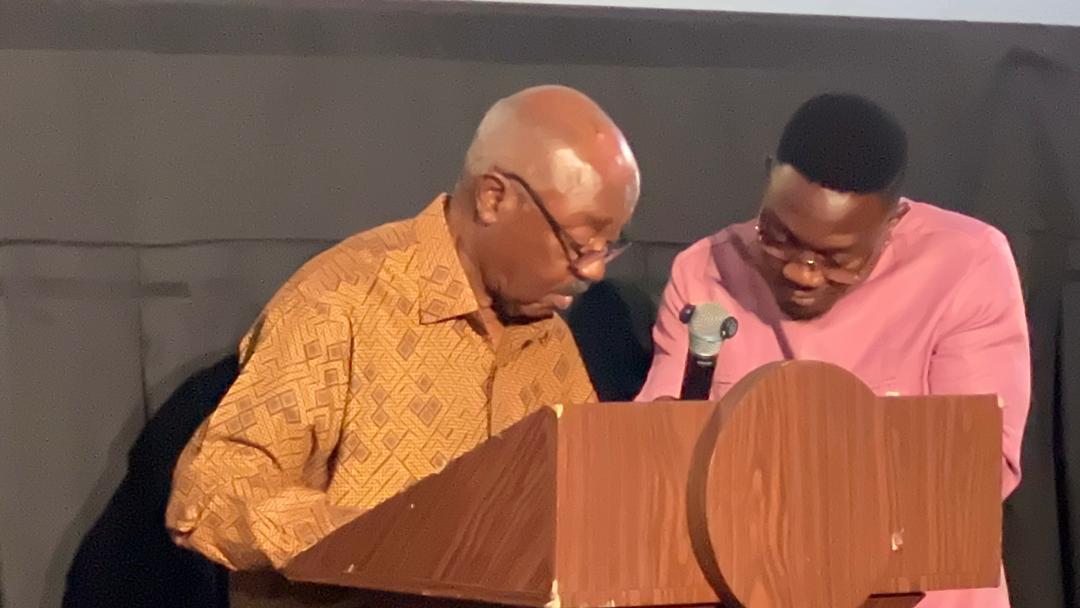
Speaking at the landmark event, legendary filmmaker and TV Africa Chief Executive Officer Kwaw Ansah delivered an emotional and stirring address, reflecting on decades of advocacy while challenging stakeholders to protect the integrity of the newly established institutions.
Ansah described the launch as a deeply moving milestone for an industry that has survived for decades on pure resilience. He highlighted the chronic obstacles Ghanaian filmmakers have endured, including limited financing, inadequate infrastructure, distribution bottlenecks, low audience penetration, piracy, and inconsistent investment. Despite these hurdles, he praised local creators for their unwavering commitment to preserving Ghana’s identity, culture, and heritage through celluloid and digital screens.
With the establishment of the Film Development Fund, Kwaw Ansah noted that the industry now possesses a transformative vehicle capable of boosting production, strengthening distribution networks, improving exhibition infrastructure, and creating sustainable jobs for thousands of young Ghanaians.
He commended the Government of Ghana, the Ministry of Tourism, Arts and Culture, and the National Film Authority for institutionalizing support for the sector, specifically acknowledging the government’s allocation of $20 million in seed funding through the Ministry of Finance. He called the allocation a bold statement of confidence in the future of Ghana’s creative economy.
However, the veteran filmmaker paired his gratitude with a stark reality check. He reminded the audience that the needs of the industry far exceed the initial seed money. To build a globally competitive industry that drives tourism and generates robust economic returns, Ansah stressed that the fund must grow, and that this growth cannot rely solely on state coffers. He called for urgent, active participation from the private sector, financial institutions, telecommunication companies, the diaspora, and the general public.
”Film is not merely entertainment. Film shapes culture. Film shapes identity. Film shapes tourism. Film shapes national image. Globally, film has become a major economic force. Countries that have invested intentionally in their audiovisual industries are now benefiting immensely through exports, tourism, job creation, and international influence. Ghana must not be left behind.”
To achieve this global standard, the filmmaker championed the National Film Authority’s strategic focus on audience engagement and grassroots exhibition programs, such as the Ghana Cinema Train. He underscored the critical need to build local cinemas, expand distribution networks, and make local content accessible to ensure creativity becomes economically sustainable.
Turning his attention to the newly inaugurated committees, Ansah offered strong words of caution and advice, urging them to operate with transparency, accountability, and fairness. He warned the committee members that they would inevitably face political and societal pressures, but implored them to remain steadfast.
Reflecting on how visual media has historically been used to dehumanize the Black race, he emphasized that the committees hold a sacred responsibility. He warned that if they yield to outside pressures and fail, the very people who pressured them would use that failure to condemn the industry and halt government funding.
”When they call you, be polite to tell them that pressure does not help tell good stories. We’ve waited for a very long time, over 40 years. And how happy are some of us that it’s taking place, so we shouldn’t joke with it.”
Ansah shared a historical perspective, recalling the 1980s when Ghana was a pioneer in African cinema, even sending crews to assist Nigerian filmmakers in the infancy of their industry. He recounted how he had previously warned past information ministers, including President John Mahama, that Nigeria’s aggressive approach would cause them to overtake Ghana if the nation did not wake up, a prediction that ultimately came to pass. With this new fund, he noted that Ghana finally has the chance to reclaim its position and urged stakeholders not to abuse the opportunity.
Addressing the specific role of the Film Classification Committee, Ansah clarified that classification must never be confused with censorship. Instead, he defined it as a framework for guidance, audience protection, and ethical responsibility that preserves creative freedom while safeguarding cultural values and vulnerable audiences. He expressed confidence that a credible classification system would build public trust and elevate professional standards across television, cinema, and digital streaming platforms.
Concluding his address on a note of inspiration, Ansah spoke directly to the next generation of Ghanaian storytellers. He urged young creatives to remain hopeful, continue dreaming, and believe in their craft, declaring that the future belongs to those who continue to imagine positively, even under difficult circumstances.
Story: Eugenia Ewoenam Osei