The Bank of Ghana (BoG) has maintained its Monetary Policy Rate at 14%, citing rising global uncertainties and emerging inflation risks linked to escalating geopolitical tensions in the Middle East.
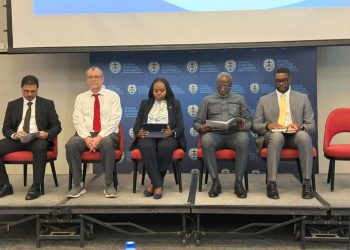
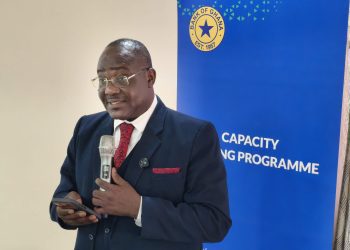
Speaking at the 130th Monetary Policy Committee (MPC) press briefing in Accra on Wednesday, May 20, 2026, Governor Dr. Johnson Asiama said the decision was taken after a careful assessment of both domestic and global economic conditions.
According to the Governor, although Ghana’s economy continues to record strong growth and easing underlying inflationary pressures, recent developments on the global front pose significant risks to the inflation outlook and broader economic stability.
Dr. Asiama explained that the ongoing conflict in the Middle East has disrupted maritime and air traffic, increased energy prices, and heightened uncertainty across global financial markets.
“The IMF has revised down its 2026 global growth projection from 3.3% to 3.1 percent, with further downward revisions likely if the conflict persists,” he stated.
He added that the blockade of the Strait of Hormuz has triggered a sharp rise in crude oil prices, reigniting inflationary pressures in advanced and emerging economies alike.
Despite these global headwinds, the Governor noted that Ghana’s domestic economy remained resilient in the first quarter of 2026.
The Bank’s Composite Index of Economic Activity (CIEA) expanded by 12.6% in March 2026, a significant rise from the 2.3% growth recorded during the same period last year.
The expansion, he said, was driven mainly by increased private sector credit, rising consumption, industrial production, and stronger international trade activities.
However, business and consumer confidence showed signs of softening in April due to concerns over the potential domestic impact of the Middle East crisis.
On inflation, Dr. Asiama disclosed that headline inflation rose marginally to 3.4% in April 2026 from 3.2% in March, marking the first increase since December 2024.
The rise was attributed largely to non-food inflation and base effects, although core inflation continued to decline, suggesting that underlying inflationary pressures remain subdued.
The Governor further revealed that interest rates on short-term instruments have declined significantly over the past year.
The benchmark 91-day Treasury bill rate dropped sharply to 4.9% in April 2026 from 15.5% a year earlier, while average bank lending rates eased to 16.3% from 27.4 percent.
Private sector credit also rebounded strongly, growing by 28.7% in nominal terms in April 2026 compared to 19.9% growth during the same period in 2025.
On the fiscal front, provisional data for the first quarter of 2026 showed improved expenditure controls despite revenue shortfalls.
The fiscal balance recorded a surplus of 0.1% of GDP against a targeted deficit of 1.2 percent, while the primary balance posted a surplus of 1.2% of GDP.
The banking sector also recorded notable improvements, with total assets growing by 26.6% year-on-year to GH¢493.9 billion in April 2026.
Additionally, the Capital Adequacy Ratio improved to 22.3 %from 17.5% a year earlier, while the Non-Performing Loans (NPL) ratio declined from 23.6 %to 18 percent.
On the external sector, Ghana’s current account surplus improved to $3.1 billion in the first quarter of 2026, supported by strong gold and cocoa export earnings as well as stable remittance inflows.
Gross international reserves also increased to $14.4 billion as of May 18, 2026, equivalent to 5.7 months of import cover.
Despite the strong external position, the Ghana cedi depreciated by 8.4% against the US dollar in the year to May 15, 2026, mainly due to demand pressures from the energy sector and dividend payments by corporate entities.
Dr. Asiama stressed that while inflation risks remain broadly balanced, upside risks persist due to volatile commodity prices, possible supply chain disruptions, and the potential impact of rising global oil prices on domestic transport and utility costs.
Consequently, the MPC decided to maintain the policy rate at 14% to safeguard macroeconomic stability while supporting the ongoing economic recovery.
The Committee also announced an additional policy measure, revising the Dynamic Cash Reserve Ratio to a uniform 20% maintained in domestic currency, effective June 4, 2026.
The next MPC meeting is scheduled for July 22, 2026, where the Committee will again review economic conditions and announce its next policy decision.