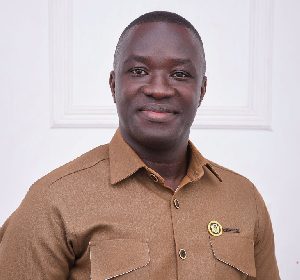
The Deputy Director-General of the Narcotics Control Commission (NACOC), Alexander Twum-Barimah, has questioned the authority of IMANI Africa’s Kofi Bentil and Bright Simons to challenge the Commission’s account of the recent cocaine seizure in Lebanon, accusing critics of drawing conclusions without understanding the complexities of international drug enforcement operations.
“To the best of my knowledge, I don’t know when Kofi Bentil and Bright Simons became authorities on security matters,” he stated during an interview on Radio Gold.
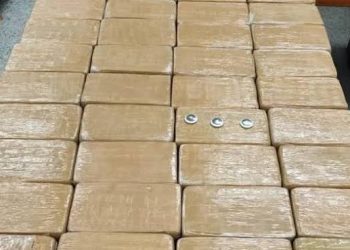
His remarks follow criticisms by the two policy analysts over NACOC’s explanation that the arrest of a Syrian national in Beirut with approximately 40 kilogrammes of cocaine was the result of a coordinated controlled delivery operation involving Ghanaian and Lebanese security authorities.
Mr Simons has questioned why initial Lebanese official accounts did not acknowledge Ghana’s involvement and raised concerns about reports alleging that the suspect bribed officials at Accra’s airport. Mr Bentil has also circulated allegations questioning the circumstances under which the consignment passed through Ghana.
Mr Twum-Barimah, however, maintained that counter-narcotics investigations involved confidential intelligence and operational arrangements that could not always be disclosed publicly.
He stressed that international drug trafficking was a complex, transnational crime requiring cooperation among security agencies across different jurisdictions.
According to him, investigators sometimes deliberately allow suspected couriers to proceed under surveillance to identify the individuals financing, receiving and coordinating illicit shipments.
He cited previous operations in which NACOC monitored suspected traffickers beyond their arrival at Ghana’s airport to identify accomplices before making arrests.
The NACOC Deputy Director-General further disclosed that Lebanese authorities visited Ghana in February 2026 to strengthen cooperation following concerns about previous cocaine shipments linked to the country.
He said the engagement resulted in an intelligence-sharing arrangement that provided the basis for the recent joint operation.
Mr Twum-Barimah maintained that the Commission was pursuing individuals connected to the shipment in Ghana and cooperating with Lebanese authorities to uncover the wider trafficking network.
He urged critics to appreciate the operational complexities involved in dismantling organised drug trafficking networks, stressing that effective investigations required intelligence, international cooperation and careful case-building rather than premature conclusions.