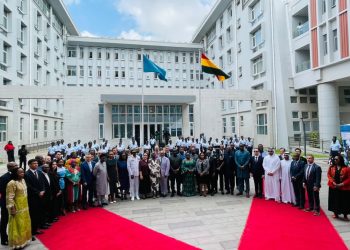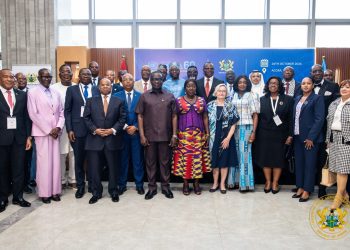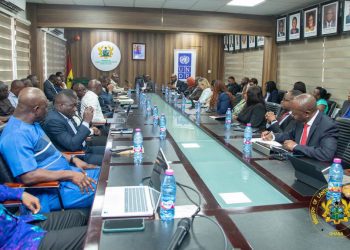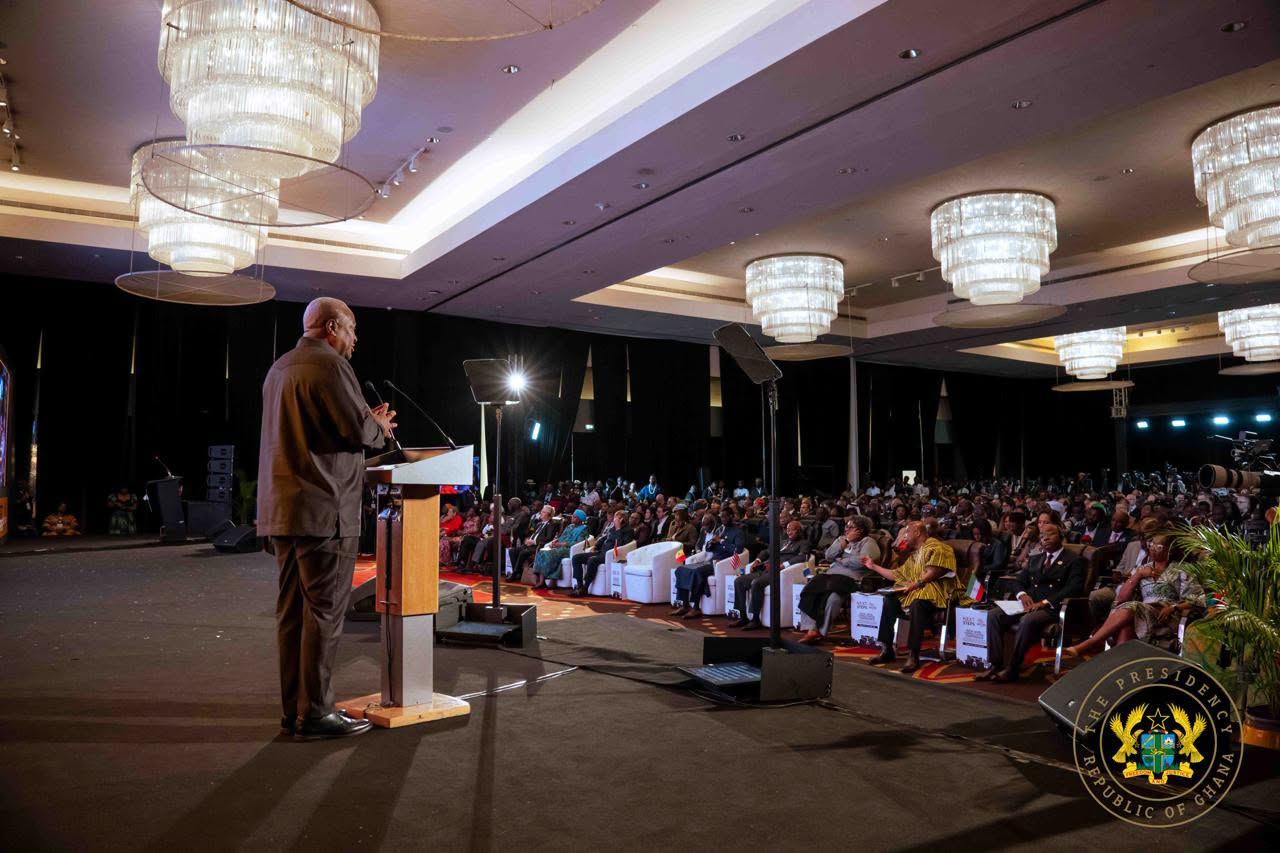
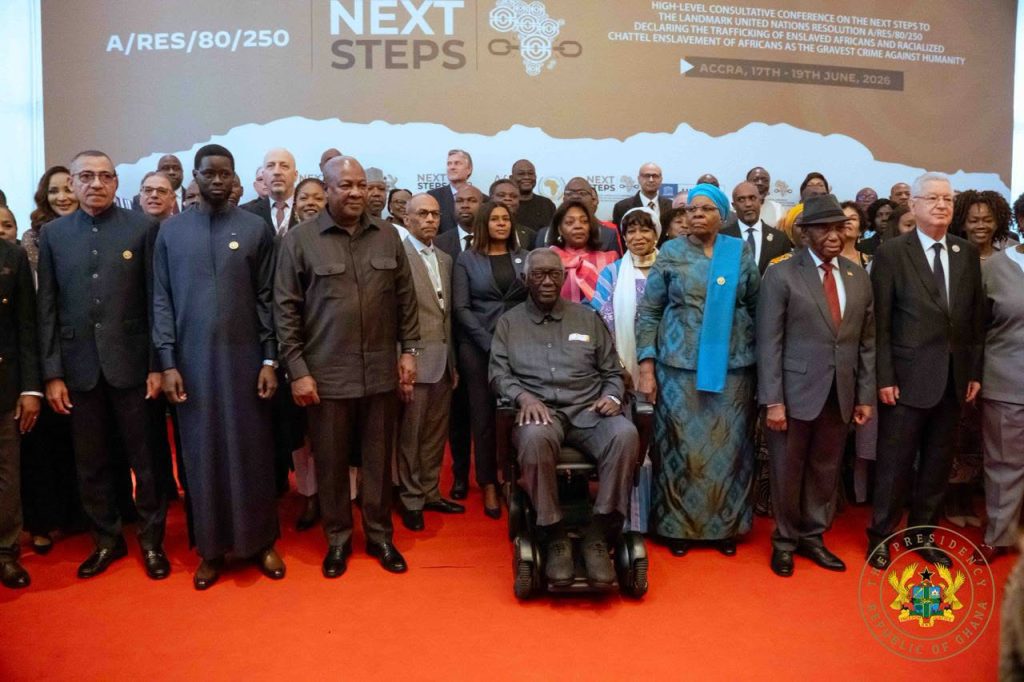
President John Dramani Mahama has called for greater global solidarity, structural equity, and historical justice as he officially closed the High-Level Consultative Conference on the Next Steps Following the Landmark United Nations Resolution on the Trafficking of Enslaved Africans.
Addressing participants in Accra, President Mahama reflected on the enduring impact of the transatlantic slave trade, describing it as one of humanity’s greatest tragedies. He recounted a powerful theatrical reenactment staged during the conference, which portrayed the brutal capture of Africans, the forced marches to coastal slave forts, and the horrors of the Middle Passage.
According to the President, the performance vividly illustrated how communities were devastated as their strongest men and women were seized, leaving behind the elderly and vulnerable. Captives were subjected to long, grueling journeys, torture, starvation, and inhumane treatment before being transported across the Atlantic.
He noted that many enslaved Africans chose death over bondage, while those who survived endured cultural erasure, including the loss of their names and identities upon arrival in the Americas.
President Mahama also highlighted the persistence of slavery even after official abolition, citing the use of secret tunnels at slave castles to continue trafficking enslaved people. He further referenced the delayed implementation of emancipation in the United States, which gave rise to the annual Juneteenth commemoration.
The President expressed satisfaction that descendants of enslaved Africans and Africans on the continent are increasingly speaking with a united voice on issues of reparatory justice. He stressed that the outcome document adopted at the conference would serve as a common platform for advancing collective advocacy and action.
“When our international partners asked what the next steps would be following the UN resolution, my response was simple: we must decide together,” he said.
President Mahama emphasized that the pursuit of justice extends beyond financial compensation, reparations, or the return of stolen cultural artifacts. He argued that meaningful justice must address the structural inequalities that continue to disadvantage people of African descent across the world.
“Our goal is to help build a fairer and more equitable world where all people have access to opportunity and prosperity,” he stated.
He also celebrated the resilience of the African diaspora, noting that cultural traditions such as the pouring of libation have survived across generations and continents, serving as enduring symbols of shared heritage.
As part of efforts to strengthen ties with the diaspora, President Mahama highlighted Ghana’s legal and policy measures aimed at welcoming people of African descent back to the continent. These include provisions that offer members of the diaspora opportunities to establish legal roots in Ghana, as well as visa-free entry for all African nationals.
He revealed that discussions are ongoing to expand similar travel arrangements to countries within the Caribbean Community (CARICOM), many of which already enjoy visa-free access to Ghana.
President Mahama formally adopted the conference’s outcome document and pledged Ghana’s continued commitment to advancing the global campaign for historical justice, equity, and the empowerment of people of African descent.
He concluded by urging Africans and members of the diaspora to remain united in transforming the painful legacy of slavery into a future founded on dignity, equality, and shared progress.
Story By: Eugenia Ewoenam Osei