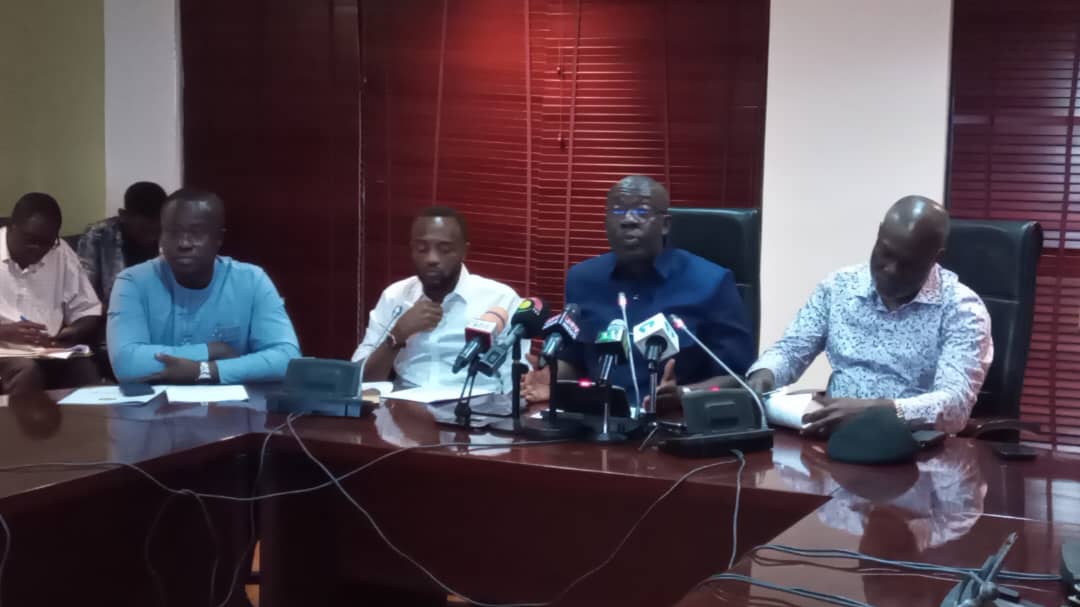
The Minority in parliament today launched a scathing critique of the government’s newly implemented 8% levy on petroleum products, equating to GHS 1 per liter.
In a press conference, the opposition vehemently denounced the tax as a “Dumsor levy,” accusing the ruling party of hypocrisy, clandestine tactics, and imposing severe economic hardship on citizens.
The Minority highlighted the substantial financial burden this levy will place on Ghanaians, insisting on an additional 8% per transaction, or GHS 4.50 per gallon, which according to the caucus represents one of the highest single tax rates ever introduced in the nation. The caucus asserts that this new charge pushes the effective tax rate on the downstream petroleum sector to a staggering 26% of the ex-pump price, projecting an estimated GHS 5.7 billion from to be extracted from Ghanaians.
A central point of contention for the Minority is the government’s shifting justifications for the levy. They pointed to conflicting statements from President Mahama, who on May 13, 2025, announced the proceeds would pay down energy sector arrears, and John Jinapor, who on June 4, 2025, stated the levy was for procuring liquid fuels, not legacy debt.
“The NDCs hypocrisy has now been exposed by the fact that in their bid to justify what they knew they will do, they have now come up with confusing explanations as to why this levy is needed and inevitable.” They stated.
“President Mahama on May 13, 2025 , at the Africa CEO Summit, Abidjan stated that “We’re using the proceeds from the Energy Sector Levy to pay down the arrears.”
John Jinapor on June 4, 2025 on Joy FM/ Citi FM /Joy News also asserted that “This levy is not intended to pay off legacy debt. The liquid fuels we currently purchase are not part of the tariff structure. We require over US $1 billion this year alone to procure liquid fuels.”
The opposition challenged the feasibility of paying off an estimated US $3.1 billion (approximately GHS 80 billion) in energy sector debt with the projected GHS 9.0 billion from the levy by December 2026.
The Minority also drew sharp comparisons to the previously debated E-levy, accusing the government of hypocrisy.
They emphasized that while the E-levy underwent extensive public consultation, was openly advertised, and had a lower 1% rate with exemptions for transactions under GHS 100, the “Dumsor levy” was “smuggled” through Parliament without prior notice or public engagement. Furthermore, the new levy has no minimum threshold, directly impacting even the poorest citizens, and possesses a “total cascading effect” that will drive up the prices of transportation, food, and other essential goods.
As alternatives, the Minority proposed renegotiating Power Purchase Agreements to integrate fuel and capacity charges into tariff calculations, thereby eliminating off-book debts. They also called for increased efficiency in GRIDCo and ECG operations to reduce losses and urged a greater commitment to renewable energy, specifically suggesting the addition of 2,000 megawatts of solar power as outlined in the NPP’s 2024 manifesto.
The Minority Caucus pledged to continue engaging the public, civil society organizations, driver unions, and oil marketing companies to oppose the levy. They reaffirmed their solidarity with groups advocating against the tax, signaling a sustained campaign for its withdrawal and the adoption of more pragmatic economic solutions.
Story By: Eugenia Ewoenam Osei