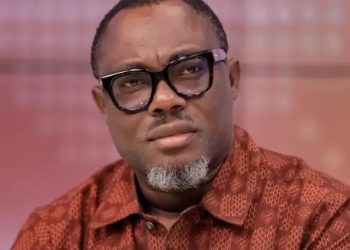
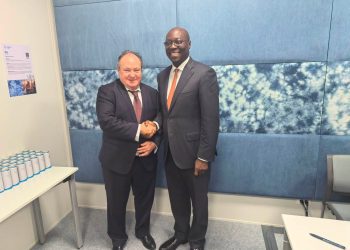
Minister for Foreign Affairs, Samuel Okudzeto Ablakwa, has signaled a definitive shift in Ghana’s diplomatic agenda, calling for the unconditional return of looted artifacts and a structured global framework for reparations following a landmark resolution on March 25.
Addressing the media and diplomatic corps, the Minister emphasized that the pursuit of reparatory justice is rooted in cultural restoration and the dismantling of systemic racism rather than simple financial gain.
The Minister opened his remarks by addressing the physical remnants of colonial history, demanding the repatriation of stolen treasures currently held in foreign institutions. He described these artifacts as essential components of the nation’s heritage and well-being, noting that many were seized directly from the palaces of traditional leaders. He stated that the government has identified many of these items and knows exactly who is holding them.
”When it comes to reparatory injustice, we are talking about artifacts that were looted. They have to be returned,” Ablakwa stated. “These are artifacts of significant cultural and spiritual linkage to us, to our heritage, to our culture, to our well-being. They are a part of us.”
Ablakwa argued that the vestiges of slavery continue to manifest in modern society through structural inequalities. He cited disparities in immigration policies, workplace conditions, and university admissions as evidence of a systemic bias that still targets people of African descent.
He further highlighted research showing that modern public health challenges in African communities can be traced back to the traumatic conditions of slave ships and dungeons. The Minister expressed hope that the recently passed resolution would lead to a total dismantling of the structures that continue to undermine the relations between people.
Clarifying the government’s stance on financial reparations, the Minister was firm that African leaders are not seeking personal enrichment or direct payments to governments. Instead, he advocated for a focused reinvestment into empowerment programs, skills training, and psychosocial support. He dismissed the narrative that no amount of money could ever truly compensate for a crime against humanity, yet insisted that perpetrators must be held accountable in the same way the international community has handled other historical injustices.
”Let me emphasize that it has nothing to do with African leaders looking for money. Nobody is interested,” he said. “The gravity of this crime against humanity, no amount of money can compensate adequately. But there has to be good faith discussion, and the perpetrators must be held accountable.”
Despite 52 countries abstaining from the resolution, including members of the European Union, Ablakwa maintained that Ghana would not pursue a policy of retribution or severed ties. He noted that on the same day the EU abstained, they signed a major agreement with Ghana, proving that the nation is not at war with its partners but is simply setting “red lines” that cannot be crossed.
He characterized the current movement as a “grand coalition” of African, Caribbean, and African-American interests that have finally seen through historical “divide and rule” strategies.
The Minister also addressed internal and external skeptics, noting that many thought the March 25 outcome was impossible.
He concluded by asserting that Ghana will continue to advocate for sincerity and truth in diplomacy, rather than a diplomacy of convenience. He invited all nations to come to the table in an honest manner before the UN Secretary-General reports on global progress next year.
Story By: Eugenia Ewoenam Osei