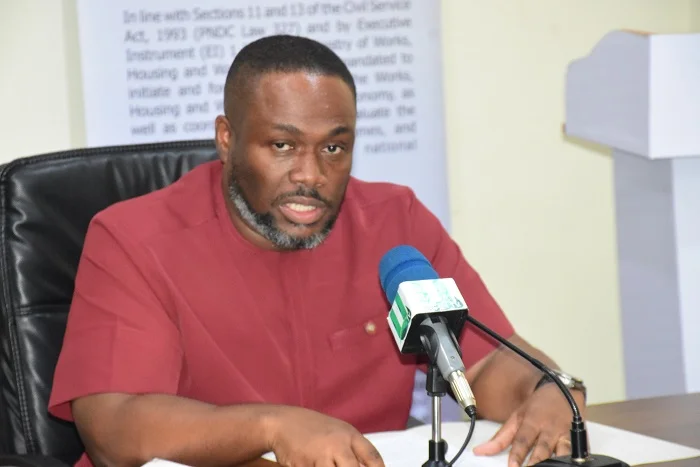
The Minister for Works, Housing and Water Resources, Hon. Kenneth Gilbert Adjei, has issued a stark warning about the future of the country’s rivers, describing the situation as “sobering” and demanding urgent national attention.
Speaking at the launch of World Rivers Day at the Press Centre of the Information Services Department in Accra, the Minister said Ghana is facing a major water crisis that threatens not only the environment but also public health, agriculture, and national development.
“Our rivers continue to face unprecedented threats. This paradox of progress on one hand and persistent challenges on the other must be addressed with boldness, pragmatism and urgency,” he declared.
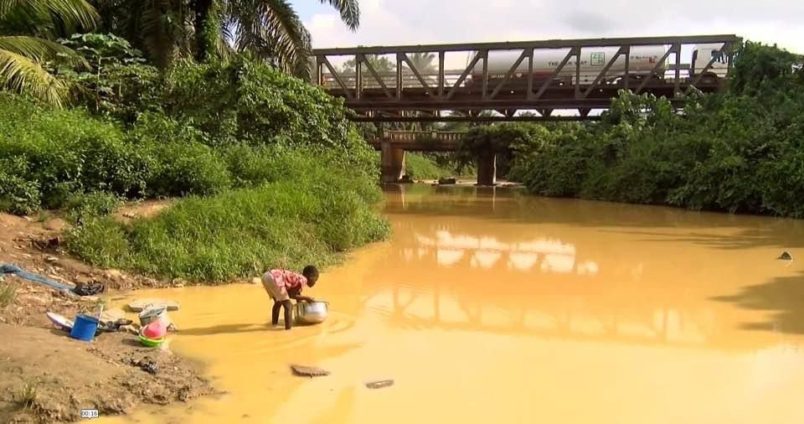
According to him, illegal mining, deforestation, plastic pollution, and the dumping of untreated waste into rivers are pushing Ghana’s water resources to the brink.
“River pollution from illegal and uncontrolled mining is a serious problem. Mercury and heavy metals are poisoning rivers like the Pra, Offin, Ankobra and Birim, rendering them unsafe for drinking and harmful to aquatic life,” he said.
He noted that industries also contribute to the growing threat. “Industries discharge untreated or poorly treated waste into rivers, compounding pollution levels.”
The consequences, the Minister warned, are enormous. According to him, this pollution not only undermines water treatment systems, driving up costs for Ghana Water Limited and the Community Water and Sanitation Agency, but also threatens human health, biodiversity and livelihoods.
He said that despite strong laws, enforcement has been poor due to “overlapping institutional mandates, limited resources, political involvement and instances of corruption.”
He also raised concerns about the decline in per capita renewable water availability, noting a drastic drop from “about 3,000 cubic meters per person per year in the 1960s to about 1,650 cubic meters per person at present.”
The Minister concluded with a grim outlook if nothing changes. “If we fail to act, the cost will be catastrophic; water shortages, food insecurity, energy crises, public health disasters, loss of biodiversity and social conflicts.”