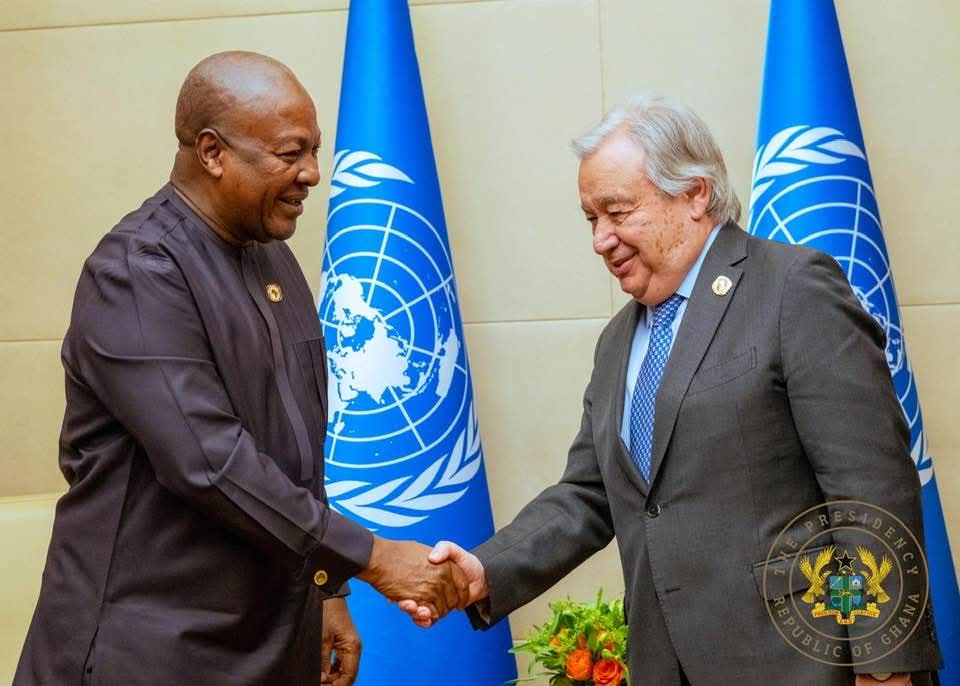
The Pan African Lawyers Union (PALU) has formally declared its unwavering solidarity with the Republic of Ghana as the nation prepares to table a historic resolution before the United Nations. This proposal seeks to officially designate the trafficking and racialized chattel enslavement of Africans as the “gravest crime against humanity.”
The resolution follows a high-level announcement made by President John Dramani Mahama during the 80th UN General Assembly in September 2025. It is scheduled for a definitive debate on March 25, 2026, a date that coincides with the International Day of Remembrance for the Victims of the Transatlantic Trafficking of Africans.
In a compelling call to action, PALU emphasized that this moment represents an essential opportunity to reposition global discourse on historical truth and reparatory justice. Acting on behalf of the African Union, the Union urges the African diaspora and the international community to consolidate their efforts in advancing this agenda.
It further recognizes the growing cooperation between the African Union and the Caribbean Community (CARICOM), particularly through the Transcontinental Partnership in Pursuit of Reparatory Justice, as a signal of collective strength.
PALU’s endorsement is anchored in the legal and historical reality that chattel enslavement functioned as the world’s first global industrial enterprise. The wealth generated from this systemic exploitation fueled the rise of current global infrastructures while fundamentally transforming political, legal, and economic systems across continents. The Union asserts that the “afterlives” of this enslavement continue to define the social, economic, and environmental realities for African peoples today.
The Union clarified that qualifying this atrocity as the “gravest crime” is a descriptive articulation of truth rather than a hierarchical assessment. This designation reflects the unparalleled scale, duration, and systemic impact of racialized chattel enslavement, which PALU describes as an absolute crime comparable to no other.
Beyond the continent, PALU reached out to a global solidarity network of citizens, institutions, and communities, urging them to amplify the calls for justice that have resonated across generations. The Union warned that an abstention or a vote against the resolution would place nations on the wrong side of history, betraying the aspirations of survivors and perpetuating the distortion of historical truths.
As the March 25 debate approaches, PALU maintains that justice and accountability are the only viable pathways toward restoring dignity and fostering genuine development across Africa and its diaspora. The adoption of this resolution is viewed not only as a moral necessity but as a foundational step toward healing and building global equity.
Story By: Eric Boateng