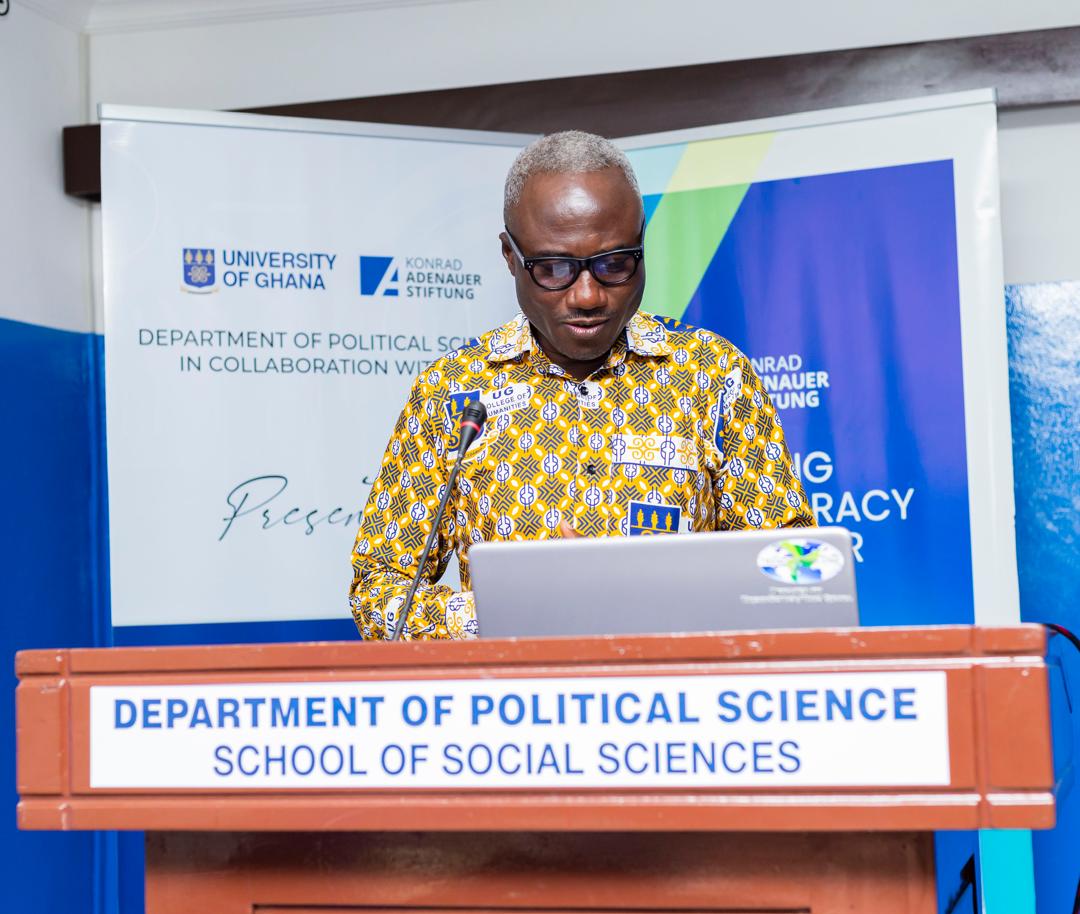
The Department of Political Science at the University of Ghana, in partnership with the Konrad-Adenauer-Stiftung (KAS), has launched a new flagship platform, “Time with a Politician,” aimed at strengthening informed political discourse and bridging the gap between academic theory and real-world governance.
The maiden edition, held at the University of Ghana, Legon, brought together students, academics, and political figures in what organizers described as a deliberate effort to promote thoughtful, respectful and experience-based political dialogue.
Speaking at the launch, the Country Representative of KAS, Anna Lena Sabroso-Wasserfall, emphasized that meaningful cooperation goes beyond formal agreements.
According to her, cooperation is fundamentally about the shared belief that institutions and individuals can achieve more by working and thinking together.
“In a world that is changing quickly, where political and social developments are complex and sometimes unpredictable, reliable partnerships matter more than ever,” she said.
She noted that KAS has maintained a presence in Ghana for about six decades, describing the Accra office as one of the foundation’s oldest globally. The longevity of the partnership, she stressed, has been sustained not merely by projects but by relationships built on trust, openness and a shared commitment to democratic dialogue.
Anna Lena highlighted universities as critical spaces where ideas are tested and young people refine their perspectives, explaining why collaboration with the University of Ghana remains central to KAS’s work.
Bridging Theory and Practice
In his welcome address, the Head of the Department of Political Science at the University of Ghana, Professor Isaac Owusu-Mensah, said the new programme is designed to close the persistent gap between classroom learning and the practical realities of political life in Ghana.
He explained that “Time with a Politician” will provide a neutral academic platform for experienced political leaders to reflect candidly on their journeys, decisions, challenges and contributions to national development.
The initiative, he said, seeks to:
• Humanize the political process
• Enrich students’ understanding of governance beyond textbooks
• Foster critical thinking and civic awareness
• Promote intergenerational dialogue that strengthens Ghana’s democracy
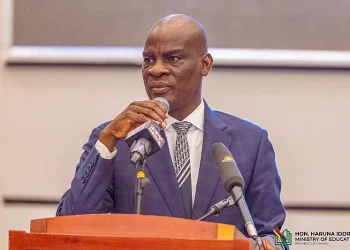
The department expressed appreciation to Kwabena Donkor, former Member of Parliament for Pru East and former Minister for Power, for accepting to serve as the maiden guest speaker.
Politics Comes with a Price — Donkor
Delivering the keynote interaction, Dr. Donkor shared candid reflections from his years in public office, stressing that political leadership often demands difficult personal sacrifices.
“There is always a price to pay for principles in politics,” he told students, explaining that competence alone does not always guarantee advancement in political life, particularly for strongly independent-minded actors.
Drawing from his experience as former Power Minister, he recounted the intense public backlash during Ghana’s energy challenges, noting that public anger can sometimes overshadow technical explanations of complex problems.
Despite the pressures, he encouraged students interested in public service to remain principled and prepared for the realities of political life.
Call for Respectful Cross-Party Cooperation
A recurring theme throughout the programme was the need for greater political cooperation in Ghana’s evolving democratic space.
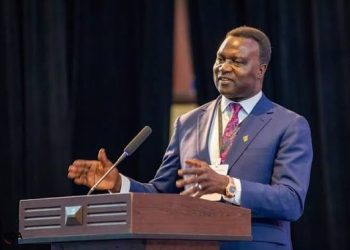
The 2024 Running mate of the New Patriotic Party NPP Dr. Matthew Opoku Prempeh who was a guest at the event stressed that multiparty democracy remains essential but warned that national challenges particularly economic pressures require openness to constructive collaboration between major parties when the national interest demands it.
He emphasized that genuine cooperation must begin with mutual respect among political actors.
“If you disrespect somebody, it becomes difficult to build the cooperation needed to solve national problems,” he noted.
Empowering the Next Generation
Organizers said the new series is primarily designed for students, giving them a rare opportunity to directly question seasoned political actors and gain deeper insight into governance and leadership.
They expressed hope that the platform will become a sustained tradition at the University of Ghana, helping to nurture critical thinking, ethical leadership and responsible citizenship among young people.
The maiden edition ended with strong calls for continued dialogue, principled leadership and collaborative problem-solving as Ghana navigates its economic and political challenges.
Story by Osman Issah Abadoo