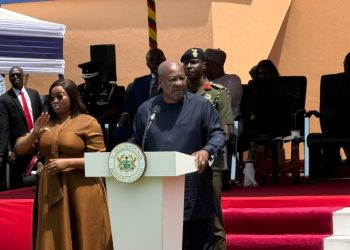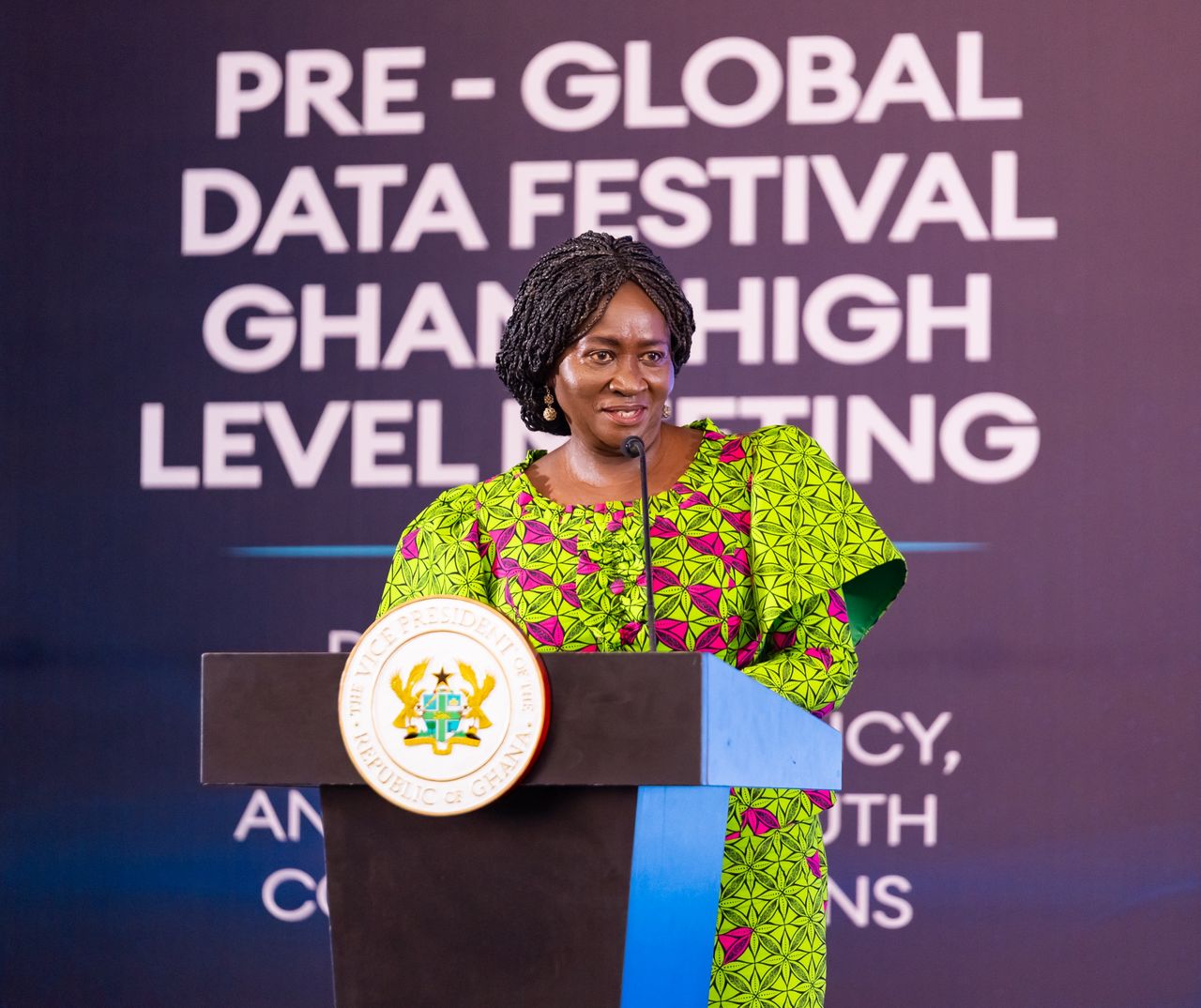
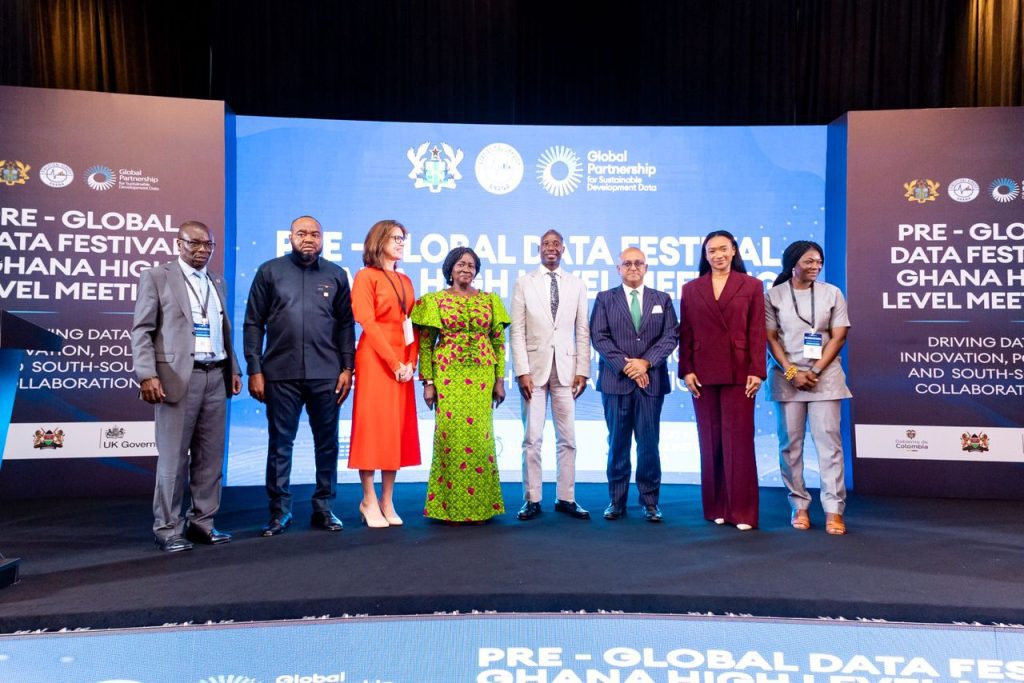
Vice President Professor Naana Jane Opoku-Agyemang has reaffirmed Ghana’s commitment to data-driven governance and inclusive development, as she welcomed global leaders, policymakers and development partners to a high-level international data meeting in Accra.
Delivering her keynote address, she stressed that in a world of uncertainty, data remains a powerful tool for informed decision-making. She noted that Ghana’s approach to governance is firmly anchored in facts, evidence and inclusivity.
Highlighting Ghana’s recent progress, Prof. Opoku-Agyemang pointed to an accelerated GDP growth of 5.3 percent in the first quarter of 2025 alongside a drop in inflation to 12.1 percent in July, achievements that have enabled government to narrow its fiscal deficit and signal economic recovery.
She outlined major initiatives, including the One Million Coders Initiative, a youth-focused digital skills program designed to prepare young Ghanaians for opportunities in the digital economy. “This initiative,” she said, “marks our intent to transition from a consumer of technology to an important contributor.”
On natural resources, the Vice President announced sweeping reforms in the mining sector, the most comprehensive in two decades.
These include the creation of GoldBod, a new regulatory agency for gold trading and the deployment of a GoldBod Task Force to combat illegal mining. In just five months, the reforms have generated over $5 billion in official gold exports.
She also highlighted innovations across health, agriculture, climate resilience and the blue economy, where data is driving policy through real-time analysis, land-use planning, and satellite monitoring of forests and coastlines.
Prof. Opoku-Agyemang praised the Ghana Statistical Service for its adaptability, particularly during the pandemic and underscored the importance of collaboration. She cited partnerships with Colombia and Kenya on the “Make Inclusive Data the Norm” project as an example of Global South cooperation shaping inclusive data systems.
Acknowledging Ghana’s development partners, including the UN, World Bank, civil society, and the private sector, she said many of Ghana’s achievements would not have been possible without international cooperation.
Looking ahead to the 2026 Global Data Festival in Nairobi, the Vice President pledged that Ghana would continue to showcase its best practices in data modernization, mobile data use, disaster risk reduction and machine learning innovations.
“Data must not only be done for us or about us,” she concluded, “but also generated by our people, governed by us, and used in our service.”
Story: Nancy Obimpeh