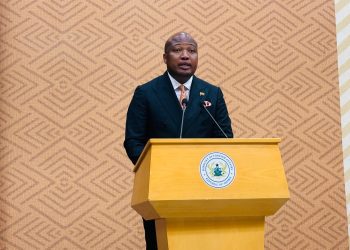
The Ministry of Energy and Green Transition has moved to allay concerns raised by the Public Utilities Workers’ Union (PUWU) over the selection of a Transaction Advisor for the proposed Private Sector Participation (PSP) in the Electricity Company of Ghana (ECG), stressing that the process does not amount to a sale of the state-owned power distributor.
In a press release, the Ministry explained that Cabinet, chaired by President John Dramani Mahama, approved the PSP framework in April 2025 as part of a wider reform programme aimed at strengthening ECG’s operations. The reforms are intended to improve billing and revenue collection, enhance service delivery, and reduce aggregate technical and commercial losses within the company.
While acknowledging that ECG has recorded notable improvements in performance since January 2025, the Ministry said significant operational and financial challenges remain, posing risks to the utility’s long-term sustainability and to the stability of Ghana’s power sector if left unresolved.
The Ministry was emphatic that the government has no intention of divesting ECG.
“The Government of Ghana does not intend to, and will not, sell ECG,”
the statement said.
According to the Ministry, the approved PSP model is not a divestiture, but rather a strategy to leverage private sector expertise through carefully structured concession arrangements to support specific operational areas of the company.
Addressing concerns surrounding the appointment of a transaction advisor, the Ministry clarified that the step is purely technical and procedural, designed to help structure the PSP framework, and should not be interpreted as a precursor to the sale of ECG.
The Ministry reaffirmed its commitment to maintaining open and constructive engagement with PUWU and urged calm and restraint as discussions continue in good faith. It also reiterated government’s resolve to protect workers’ interests, strengthen ECG as a public asset, and ensure a reliable, efficient, and sustainable power supply for all Ghanaians.
The statement comes amid heightened public and labour union scrutiny of reforms in the energy sector, as government seeks to balance efficiency gains with job security and public ownership of strategic national utilities.