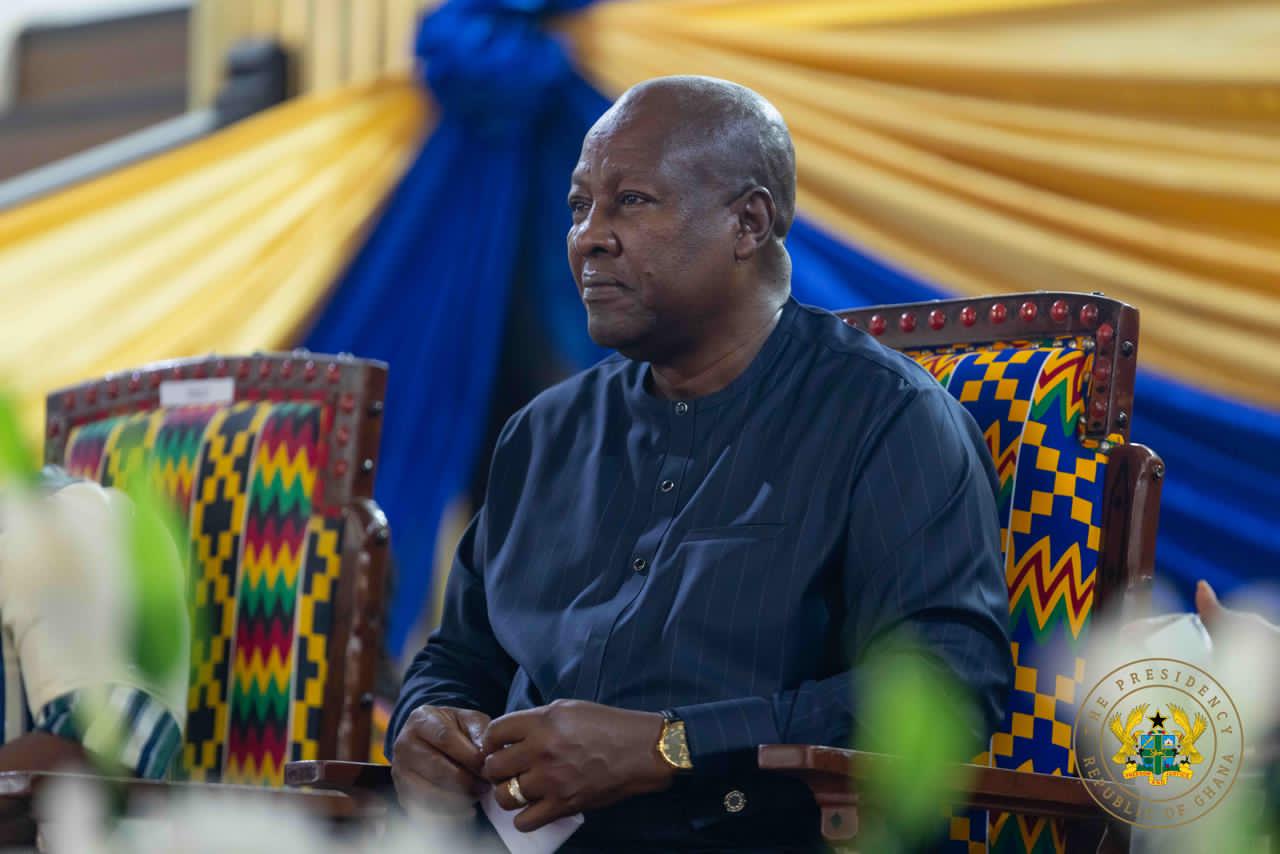
President John Dramani Mahama has called for a renewed national commitment to long-term development planning, fiscal discipline, and inclusive governance, warning that Ghana’s progress cannot continue to be reset with every change of government.
Opening the 77th Annual New Year’s School and Conference, President Mahama said the gathering marked “not merely the opening of a new year, but a season of national introspection.”
“It invites us to interrogate where we are, how we got here, and most importantly, where we must go together as a people,” he stated.
He commended scholar Ishmael Yamson for his contribution to the conference theme, Building the Ghana We Want Together for Sustainable Development, describing the forum as evidence of “the enduring role of academia in shaping Ghana’s democratic and development journey.”
Ghana at a crossroads
President Mahama noted that nearly seven decades after independence, the key challenge facing the country is no longer self-governance, but the quality, equity, sustainability, and resilience of national development.
“The Ghana we want cannot be built by any one individual or single administration. It requires partnership, discipline, innovation, and national consensus,” he said.
He stressed that development must transcend political cycles, arguing that economic programmes should be medium to long-term and insulated from regime changes.
“We cannot build the Ghana we want if progress made under one government is reversed under another,” the President added.
Economic recovery and infrastructure push
Touching on the economy, President Mahama announced improvements in key macroeconomic indicators, revealing that public debt had declined from over 66 per cent of GDP at the end of 2024 to about 45 per cent by the end of 2025, while foreign reserves rose from $8.9 billion to $13.8 billion over the same period.
He said government had invested more than $13 billion in infrastructure under the Big Push programme this year, with $30.8 billion allocated for 2026.
One of the flagship projects, he said, is the Accra–Kumasi Expressway, describing the current single-lane road linking Ghana’s two largest cities as unacceptable.
“It is a shame that our two biggest cities are connected by a single-lane road,” he remarked, pledging that construction would commence this year.
President Mahama also announced plans to develop a Green Digital City spanning Greater Accra, Eastern and Volta Regions, aimed at decongesting the capital by relocating selected government institutions.
IMF exit and value addition policy
The President confirmed that Ghana would exit its IMF Extended Credit Facility programme by the middle of the year, expressing hope that it would be the country’s final bailout.
“It must be the 17th and the last time Ghana goes to the IMF for a bailout,” he declared.
He further announced a new policy requiring value addition to minerals, petroleum and agricultural products before export, aligning with the government’s 24-hour economy and accelerated export development programme.
“This is not a slogan. It is a structural transformation strategy,” he said.
Education, governance and accountability
On human capital development, President Mahama reiterated government’s focus on improving learning outcomes and aligning education with a modern, digital and green economy.
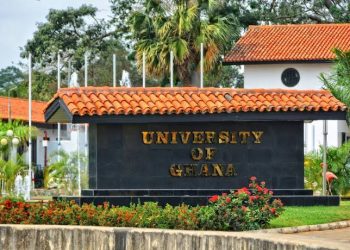
He announced an additional GH¢70 million allocation in 2026 for the Digital Youth Village and the Centre for Digital Youth Development at the University of Ghana.
Addressing governance, the President said an Independent Value for Money Office would be established this year to ensure efficiency in public spending, while the Code of Conduct for Public Officers Bill would be passed into law.
“Accountability must be real and not rhetorical,” he stressed.
He also reaffirmed the ban on ministers and public officers travelling first class, saying leadership must demonstrate discipline and modesty.
Environment, inclusion and national unity
President Mahama warned that illegal mining, deforestation and pollution threaten Ghana’s future, urging institutions fighting environmental degradation not to relent despite resistance.
“We cannot build the Ghana we want while destroying the natural foundations of our future,” he said.
On inclusion, he acknowledged delays in implementing the Affirmative Action Law, pledging stricter gender representation requirements for governing boards of state institutions.
“Our women are equally qualified and capable of leading,” he stated.
Call to action
In closing, President Mahama urged Ghanaians to see sustainable development as a continuous national responsibility rather than a destination.
“The Ghana we want is not an illusion. It is achievable through discipline, unity, integrity and visionary leadership,” he said.
Story: Patrick Asford Boadu