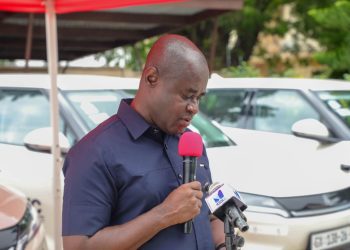
The Chairperson of the Energy Commission Board, Prof. John Gatsi, has raised serious concerns regarding systemic failures at the Tema Port following an extensive fact-finding tour of the facility. The visit, conducted alongside other board members, aimed to investigate lapses in the enforcement of energy efficiency standards and the suspected evasion of importation levies.
The tour comes on the heels of a damning internal report revealing that thousands of electrical items, specifically solar PVs and refrigerating appliances have entered the country without valid licenses or the payment of statutory fees.
Prof. Gatsi highlighted that a primary concern is the fluid definition of “personal use,” which many importers are exploiting to bypass commercial regulations. He noted that people are importing huge volumes of items under this guise, which directly defeats the purpose of the Commission’s regulatory framework. Between December 2024 and August 2025, an estimated 98,000 solar PV units were imported, with the majority lacking any proper documentation.
One of the most startling revelations from the tour was the Commission’s lack of a dedicated holding facility. Currently, when items are detained for non-compliance, they are often sent back to the importer’s own warehouse because the Commission has no space to store them.
The board chair explained that this creates a situation where items go into “detention” but are often cleared or taken away without the Commission’s knowledge. He remarked that the Commission virtually ceases to have control over an item the moment it is stored in a private warehouse, rendering the detention notice ineffective.
Inspectors on the ground echoed these frustrations, noting that clearing agents often bypass Energy Commission officials entirely, sometimes signing detention orders themselves to facilitate the quick release of goods. Technical staff briefed the Board on how agents manipulate the system by “automating” cargo lists, repeating the same templates for different containers to hide the true volume of goods. In one instance, a declaration of 100 items was found to potentially mask thousands of non-compliant products.
While the Board is still assessing the full scale of the fallout, the financial implications are significant. Prof. John Gatsi stated that there is a clear and substantial loss of revenue to the state, affecting not only the Commission but also the Ghana Revenue Authority and Customs.
He emphasized that the Commission has already conducted extensive outreach with manufacturers in China and Korea to ensure they understand Ghana’s standards, meaning there is no excuse for the continued influx of sub-standard goods.
The Board Chairperson emphasized that the Commission is now looking toward permanent solutions, including the establishment of a dedicated state-controlled warehouse to ensure detained goods remain under official oversight.
There are also plans to increase staffing levels at the ports for more effective monitoring and to tighten the legal definition of “personal use” to prevent commercial-scale smuggling. He reminded the public that the ban on used refrigerating appliances under L.I. 1952 remains in force, and any items failing to meet these standards will be seized to protect the Ghanaian market and consumers.
The Board is expected to meet in the coming weeks to deliberate on the final recommendations of the investigative report and begin implementing these corrective measures.
Story By: Eugenia Ewoenam Osei