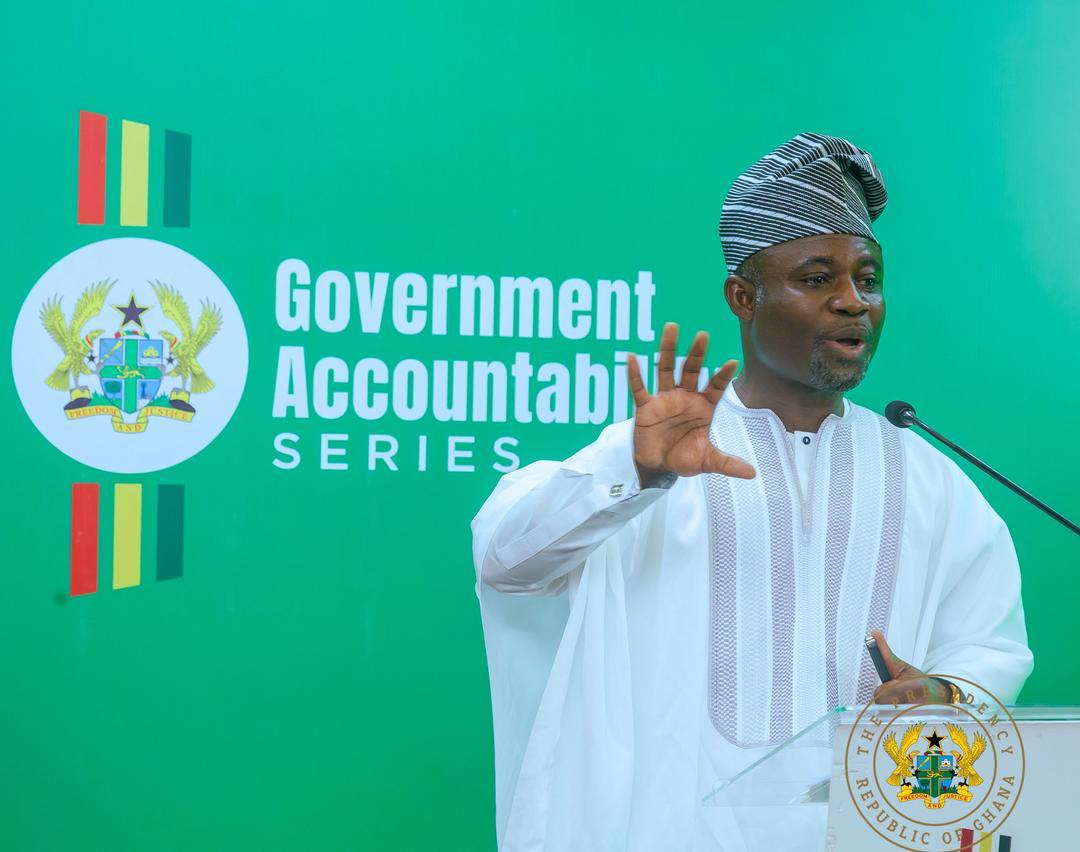
The Minister for Health, Kwabena Mintah Akandoh, has officially introduced the government’s Free Primary Health Care (FPHC) Policy, describing it as a major shift toward early, accessible, and cost-free healthcare for all Ghanaians.
Addressing the media in Accra, the Minister said the policy is designed to remove financial barriers at the point of care and ensure that Ghanaians can seek treatment early without worrying about cost.
“Ultimately, this is not just about policy,” he stated. “It is about whether a Ghanaian can access care early, easily, and without worrying about cost.”
Bridging the Gap to Universal Health Coverage
Mr. Akandoh explained that the initiative forms part of Ghana’s broader effort to achieve Universal Health Coverage (UHC) ensuring access to essential health services without financial hardship.
According to him, Ghana’s UHC service coverage index currently stands at about 56 percent, with a target of reaching 80 percent by 2030.
“While we have made important progress, we still have a lot of work to do,” he noted.
Despite interventions such as the Community-based Health Planning and Services (CHPS) programme and the National Health Insurance Scheme (NHIS), the Minister acknowledged that gaps remain.
“Only about two-thirds of the population is actively enrolled in the NHIS,” he said. “Out-of-pocket payments still account for roughly one-third of total health expenditure.” He warned that these financial barriers often delay care-seeking.
“When people have to pay, they delay. They wait. By the time they come to the facility, the condition has often worsened,” he added.
Responding to Ghana’s ‘Triple Burden’ of Disease
The Minister highlighted Ghana’s growing health challenge, describing it as a “triple burden of disease,” with the country simultaneously battling infectious diseases and a rise in non-communicable diseases such as hypertension, diabetes, cancer, and stroke.
“Hypertension develops silently. Diabetes progresses quietly. Many people are living with these conditions without knowing until complications occur,” he said.
Citing data, he revealed that only about 35 percent of hypertensive individuals in Ghana are aware of their condition, leading to late diagnoses and more severe health outcomes.
What the Free Primary Health Care Policy Offers
The FPHC policy guarantees free access to a defined package of essential services at the primary care level, including CHPS compounds, health centres, and polyclinics.
Mr. Akandoh said the policy will cover preventive, promotive, and basic curative services at no cost to patients.
“It is important to emphasise that there will be no cost for these services. The only requirement is a valid national ID,” he said.
Services under the policy include:
Routine screening for hypertension, diabetes, obesity, mental health conditions, and certain cancers
Maternal and child health services such as antenatal care, immunisation, and growth monitoring
Health promotion activities including family planning and lifestyle counselling
Treatment for common conditions like malaria, diarrhoea, and respiratory infections
Basic emergency care, counselling, and referrals
“These are the services that address the majority of health needs in our population,” he emphasised.
Taking Healthcare Closer to the People
Beyond facility-based care, the policy will extend services into communities through structured outreach programmes.
Health workers will conduct home visits, organise community screenings, and engage schools, churches, and workplaces.
“This ensures that even those who do not actively visit facilities are still reached,” the Minister said.
He added that the government plans to integrate school clinics and community pharmacies into the system over time.
Phased Implementation and Resource Backing
The policy will be rolled out in phases between 2026 and 2028, starting with 150 underserved districts before expanding nationwide.
“This phased approach allows us to learn, adjust, and ensure quality and sustainability,” Mr. Akandoh explained.
To support implementation, the government has procured over 24,500 pieces of essential medical equipment, including incubators, glucometers, hospital beds, and ultrasound machines.
“We are not just announcing this policy we are delivering it with real resources,” he said.
The Minister also disclosed plans to establish more than 350 container-based service delivery points in high-traffic areas such as markets and lorry parks.
“Very soon, health workers will not only be waiting at facilities they will be in your homes, schools, and workplaces,” he added.
Financing and Accountability
Funding for the programme has been integrated into the National Health Insurance Authority budget, using a hybrid model that combines population-based financing for preventive services and NHIS reimbursements for curative care.
Mr. Akandoh noted that broader reforms, including the uncapping of the NHIS and the establishment of the Ghana Medical Trust Fund, will support long-term sustainability.
“We are building a complete system from prevention to treatment to specialised care,” he said.
He also assured the public that strong accountability mechanisms would be in place to monitor service delivery, quality, and patient satisfaction.
A ‘Reset’ for Ghana’s Health System
Concluding his address, the Minister described the policy as a turning point for the country’s healthcare system.
“This policy is about changing outcomes. It is about reducing avoidable illness and preventable deaths,” he said.
“To the people of Ghana, my message is simple: go early, get screened, and use the services responsibly.”
“Free Primary Health Care is not just a policy,” he declared. “It is a reset toward prevention, equity, and a stronger, more resilient Ghana.”
Story: Patrick Asford Boadu