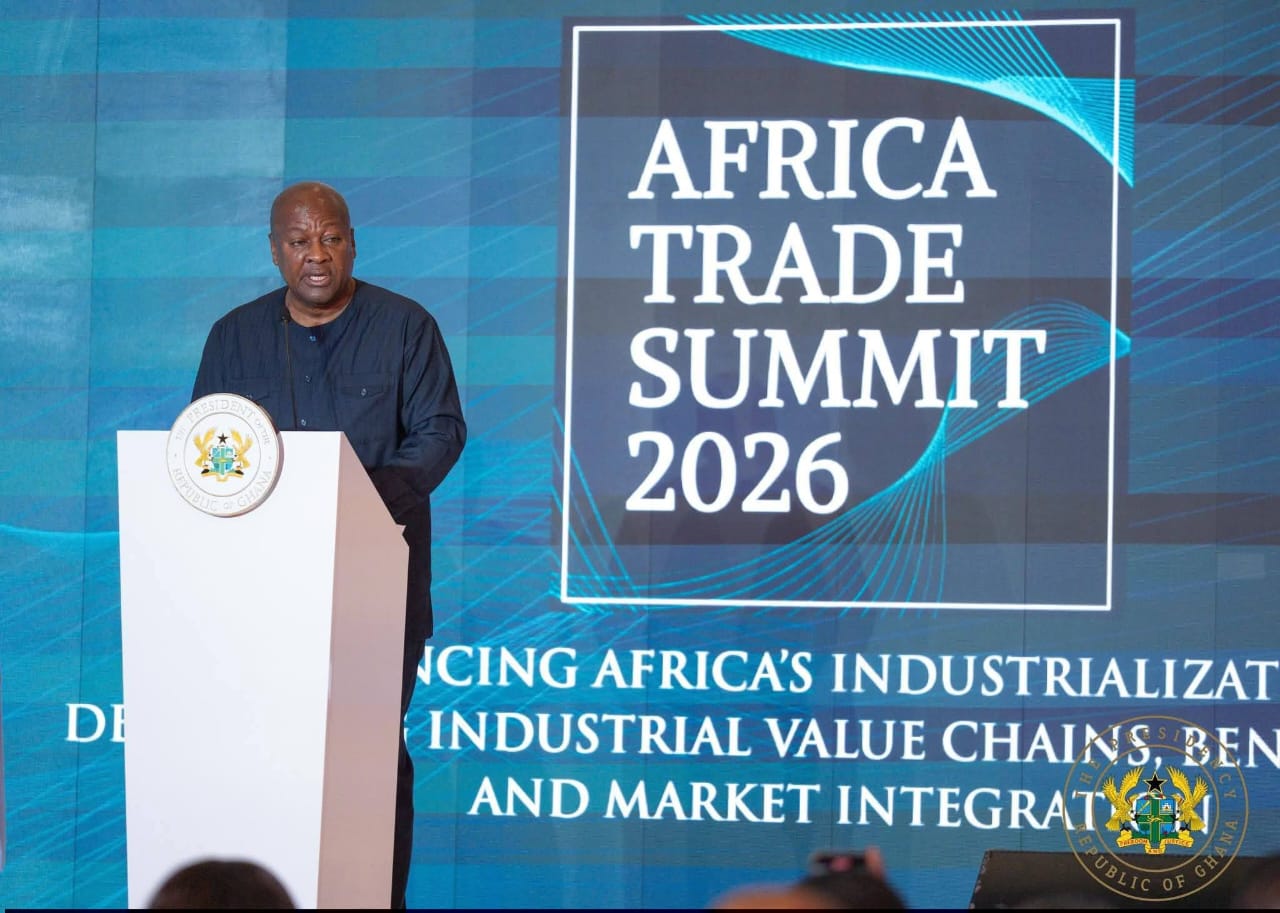
As the Africa Trade Summit 2026 concludes today at the Kempinski Gold Coast City Hotel in Accra, a powerful new consensus has emerged. What began as a high-level dialogue has evolved into a definitive roadmap for the continent’s economic sovereignty, signaling a historic pivot from external aid toward a future funded and fueled by Africa itself.
The two-day summit, themed “Financing Africa’s Industrialization: Developing Industrial Value Chains, Beneficiation, and Market Integration,” served as a crucible for bold policy shifts and significant investment pledges.
The summit was defined by a unified resolve among heads of state, led by President John Dramani Mahama, and industry icons such as Sam Jonah. The overarching message was unequivocal, Africa’s industrial transformation has transitioned from a strategic choice to an absolute economic necessity.
A primary outcome of the assembly was the formal adoption of a framework to prioritize “Made-in-Africa” goods. In an announcement, Trade Minister Elizabeth Ofosu-Adjare revealed a 2026 amendment to Ghana’s trade policies, designed to ensure that local products become the primary choice for both domestic consumers and regional partners.
A central theme of this session was the mandate to terminate the cycle of aid dependency. Leaders committed to aggressive domestic resource mobilization, focusing on the redirection of pension and sovereign wealth funds into long-term industrial infrastructure.
By utilizing blended finance models, governments aim to de-risk private sector investments in manufacturing, while simultaneously intensifying efforts to block the illicit financial flows that drain billions from the continent annually.
President Mahama’s address regarding the “Chocolate Gap” provided the summit’s most resonant rallying cry. Noting that Africa produces nearly 70% of global cocoa yet remains a mere price-taker in the global market, the resolution established a new standard; no raw material, from gold and lithium to agricultural commodities should leave the continent without meeting a minimum threshold of local processing.
To ensure the African Continental Free Trade Area (AfCFTA) moves beyond policy into practice, the summit prioritized the removal of non-tariff barriers and the streamlining of customs.
The goal is to eliminate the bureaucratic delays that currently hinder cross-border trade, supported by new digital infrastructure to facilitate seamless payments between small and medium-sized enterprises (SMEs).
Trade Minister, Elizabeth Ofosu-Adjare also presented Ghana’s 24-Hour Economy initiative as a scalable model for the sub-region. By transitioning to round-the-clock production, Ghana aims to serve as a continuous industrial hub, meeting the rising demands of the continental market.
To support this, the government highlighted the removal of the E-levy and betting taxes as essential measures to stimulate a more competitive business environment.