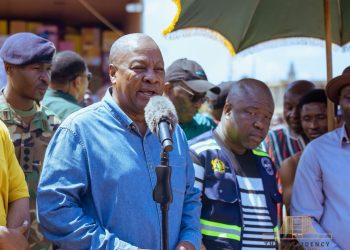
In an impassioned call to action at the opening of the African Union Extraordinary Meeting on Health in Accra, Ghana’s Minister for Health, Kwabena Mintah Akandoh, urged African nations to transition from political rhetoric to decisive action in achieving continental health sovereignty.
Welcoming Health, Finance, and Foreign Affairs Ministers alongside international delegates on behalf of President John Dramani Mahama and the people of Ghana, Akandoh framed health access not merely as a privilege or act of charity, but as a fundamental issue of social justice.
Highlighting the continent’s strides over the past generation, the Minister noted that Eastern and Southern Africa have achieved nearly a sixty percent reduction in new HIV infections and cut AIDS-related deaths by more than half. These achievements, he stated, prove that Africa is moving away from being a global cautionary tale and is actively demonstrating what is possible when driven by local leadership and innovation.
However, Akandoh delivered a candid assessment of the remaining challenges, emphasizing that progress should not be mistaken for ultimate success. He highlighted that Africa still accounts for almost seventy percent of all maternal deaths worldwide, with nearly two hundred thousand African women losing their lives every year to causes that modern medicine already knows how to prevent.
He further pointed out that Africa’s average Universal Health Coverage service index remains at forty-four, the lowest globally compared to the world average of seventy-one. This gap continues to force millions of families into devastating financial trade-offs between essential healthcare, basic living costs, and education, effectively shifting the burden from illness to debt.
To bridge these gaps and operationalize the African Union Roadmap to 2030 and Beyond, the Health Minister outlined three critical commitments that African nations can no longer postpone.
First, he underscored the urgent need for domestic health financing. Reaffirming the spirit of the 2001 Abuja Declaration, the Minister stressed that African health systems must be sustained by predictable, domestically generated resources rather than relying heavily on shifting external priorities.
Second, he called for concrete steps to strengthen continental health sovereignty. Recalling the painful lessons of recent global crises, Akandoh asserted that Africa must never again find itself waiting at the back of the queue for vaccines and medicines. Achieving true independence, he noted, requires pooled procurement, regulatory harmonization, resilient regional supply chains, and direct investments in local manufacturing.
Third, the Minister urged leaders to place primary healthcare at the very center of their health strategies. He emphasized that resilient systems are not built through tertiary hospitals alone, but through frontline health workers, midwives, community clinics, and local health teams who serve as the backbone of healthcare delivery every day.
Addressing delegates, Akandoh presented Ghana’s recent health interventions as practical examples of translating vision into action. Ghana has restored full funding to its National Health Insurance Scheme and established the Ghana Medical Trust Fund, known as MahamaCares, to support families facing non-communicable diseases such as cancer, stroke, and kidney failure.
Furthermore, the recent launch of the Free Primary Health Care initiative aims to remove financial barriers to essential care so that no Ghanaian is denied basic treatment.
Concluding his address, the Minister challenged the delegation to ensure that the outcomes submitted to Heads of State lead to tangible results on the ground rather than remaining mere declarations. He reminded delegates that the true measure of their success will be judged by whether a rural mother survives childbirth and whether families can protect both their loved ones and their livelihoods.
Reaffirming Ghana’s commitment to driving the “Accra Reset,” Akandoh urged leaders to deliberate with honesty and decide with the courage needed to secure Africa’s health through its own institutions and leadership.
Eugenia Ewoenam Osei