Managing Editor of the Insight Newspaper Dr Kwesi Pratt Jnr has criticised what he describes as the politicisation of Ghana’s fight against narcotics trafficking, insisting that the problem predates the current administration and has confronted successive governments.
Speaking on Alhaji and Alhaji on Pan African Television, Dr Pratt said politics should be centred on advancing the interests of the people rather than becoming “an unprincipled struggle for power for its own sake.”
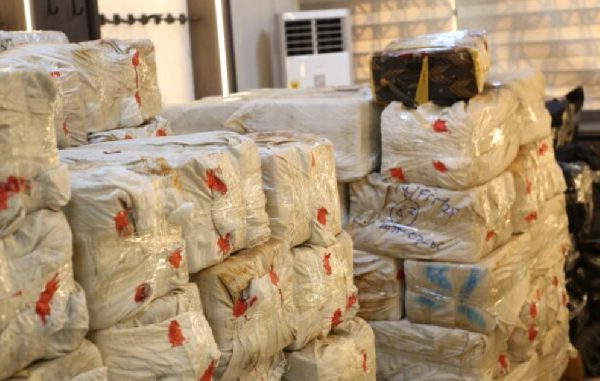
He rejected suggestions that recent cocaine seizures should be treated primarily as a problem associated with the Mahama administration, arguing that successive governments, including those of Presidents John Kufuor, John Evans Atta Mills and Nana Addo Dankwa Akufo-Addo, faced similar challenges.
“It is not a Mahama problem. All of our governments have faced this problem,” he stressed.
Dr Pratt also challenged attempts to judge the performance of different administrations solely by the quantity of cocaine seized during their tenure.
He argued that seizure figures alone cannot establish how much narcotics actually entered the country, since the quantity successfully intercepted does not reveal the volume that escaped detection.
According to him, using the amount confiscated as a direct measure of a government’s performance therefore amounts to flawed analysis.
“What poor analysis is that?” he asked, describing such comparisons as “completely illogical.”
Dr Pratt further urged a broader approach to the issue of smuggling, saying the national conversation should not focus exclusively on cocaine while other illicit substances, including cyanide, pose serious environmental and public-health concerns.
He cited the reported effects of illegal mining and cyanide pollution on communities, including damage to water bodies, traditional fishing and human habitation.
While acknowledging cocaine trafficking as a serious problem that must be tackled, Dr Pratt argued that the response should be proportionate and should address the wider range of illicit substances entering the country.
He also pointed to a recent The Hawk newspaper analysis covering Ghana’s drug-trafficking history over several decades, saying the report demonstrated that the country’s narcotics problem was neither new nor unique to one administration.
Dr Pratt said Ghana’s drug-trafficking challenge should therefore be treated as a national security problem requiring sustained attention rather than reduced to a partisan contest between the NDC and NPP.