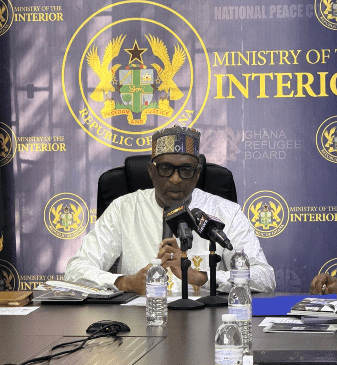
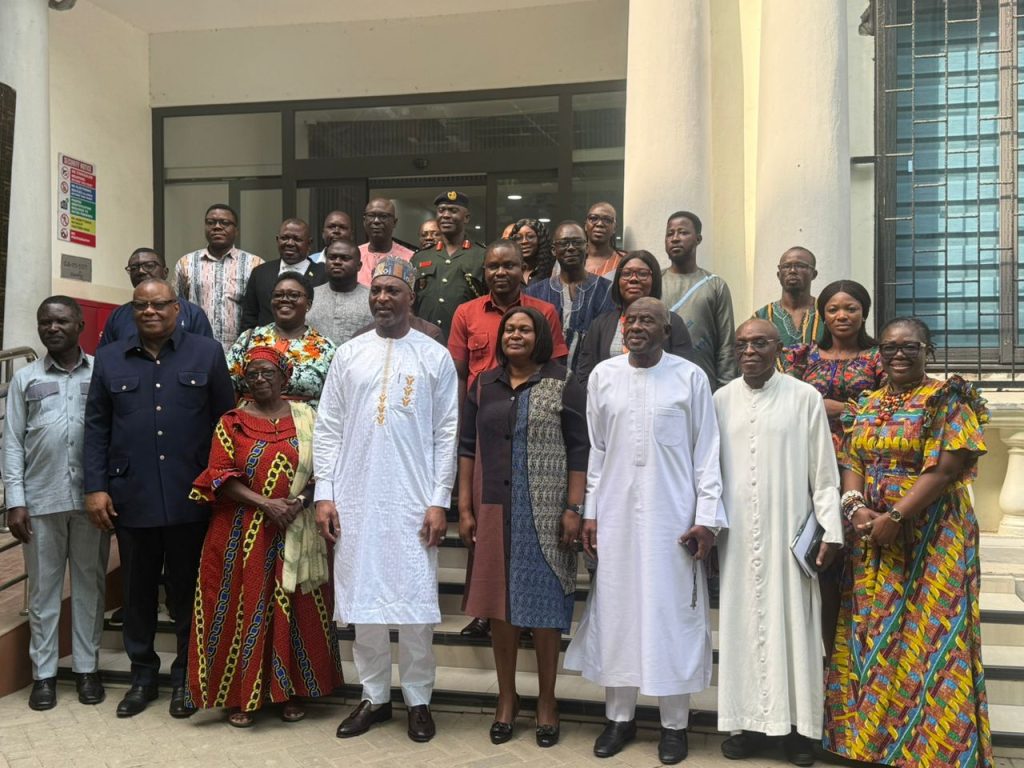
The government-appointed Gbinyiri Mediation Committee has presented its final report to the Minister for the Interior, Mohammed Muntaka Mubarak, outlining key recommendations aimed at restoring social cohesion and preventing renewed violence in the Savannah Region.
The presentation ceremony, attended by community leaders, youth representatives and development partners, marked a significant milestone in efforts to address last year’s disturbances in Gbinyiri and surrounding communities.

Report to Serve as Roadmap for Peace
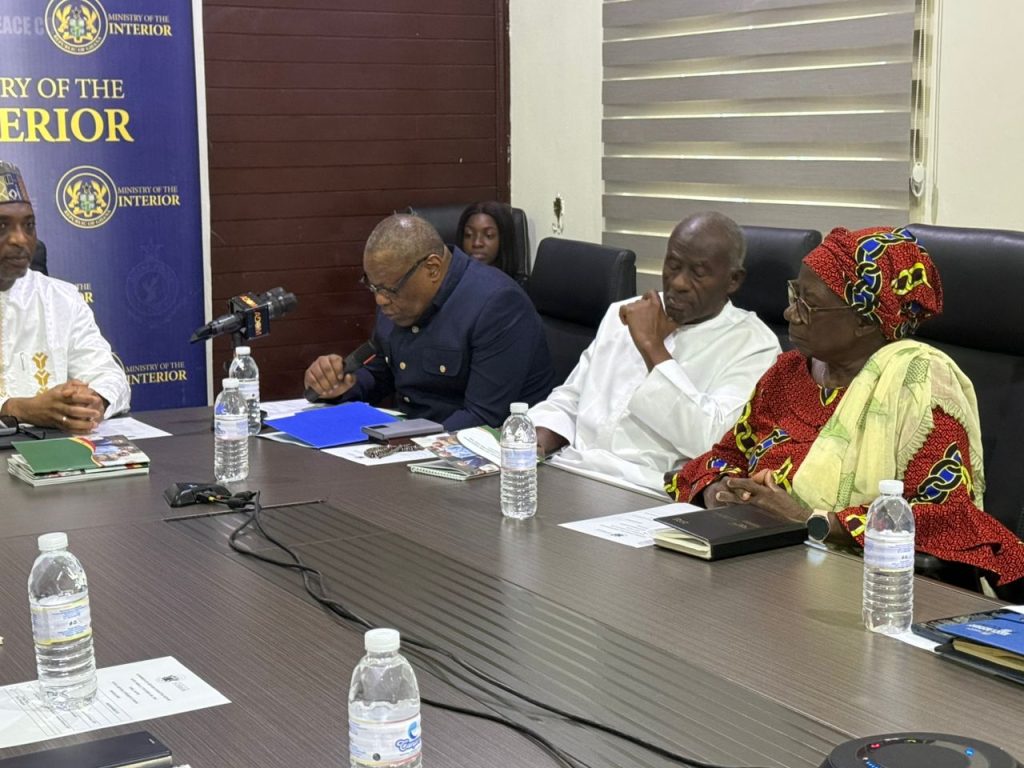
Receiving the report, Hon. Mohammed Muntaka Mubarak commended the committee for its dedication and described the document as a roadmap for rebuilding trust, tolerance and peaceful coexistence in the affected areas.
He assured the gathering that copies of the report would be forwarded to President John Dramani Mahama for further action and consideration.

The Minister emphasized the importance of implementing the committee’s recommendations and called for continued cooperation among stakeholders to consolidate gains made so far.
“Rebuilding trust is not easy once it is lost,” he noted, urging all parties to remain committed to reconciliation efforts.
Dialogue Between Gonja and Lobi Communities
Chairman of the mediation committee, Mr. Emmanuel Bombande, reported that the committee made significant progress after months of consultations and structured engagements.
Established in September 2025, the committee focused on creating a secure environment for dialogue, facilitating the safe return of internally displaced persons and refugees, and rebuilding trust among rival groups.
A key highlight of the process was a high-level “grand dialogue” between the Gonja and Lobi platforms held in the Greater Accra Region. Mr. Bombande described the dialogue as “unique, crucial and unprecedented,” providing a rare opportunity for direct engagement on long-standing grievances.
He said participants made tangible pledges to strengthen peace and repair fractured relationships.
Key Recommendations
The committee’s final report outlines several measures to ensure durable peace, including:
• Establishing a monitoring mechanism in partnership with the Regional Security Council, civil society organisations and development partners to oversee implementation of agreements reached.
• Strengthening local institutions to adopt preventive approaches capable of responding swiftly to early warning signs of conflict.
• Ensuring continued involvement of traditional leaders, youth groups, and key community actors — including the Father community and priests who played roles in local reconciliation rites.
• Prioritising the safe repatriation and reintegration of internally displaced persons and refugees.
Mr. Bombande stressed that while the dialogue process has yielded encouraging results, sustained political will, adequate resources and continuous stakeholder engagement will be required to translate agreements into lasting peace on the ground.
Government Pledges Support for Implementation

The Interior Minister assured the committee and community leaders that government remains committed to supporting implementation of the recommendations.
He acknowledged that the mediation process encountered challenges but described the progress achieved as significant and encouraging.
The Minister also called on committee members, community leaders and development partners to remain actively engaged in follow-up activities to ensure that the foundations laid through the mediation process are not eroded.
The Gbinyiri disturbances drew national attention last year, prompting government intervention to prevent further escalation in the Savannah Region.
With the submission of the final report, attention now shifts to implementation. Both government and mediation leaders agree that the success of the process will depend on effective monitoring, sustained community participation and continued institutional support and durable peace and development.
Story by Osman Issah Abadoo