The Government of Ghana has reaffirmed its strong commitment to environmental sustainability with the official launch of the Tree for Life Restoration Initiative, a nationwide tree-planting campaign aimed at restoring degraded landscapes, combating climate change, and promoting a culture of environmental stewardship.
The symbolic ceremony, held at the Achimota Forest in Accra— one of Ghana’s last remaining urban green spaces—was attended by members of the diplomatic corps, religious leaders, and representatives from corporate institutions.
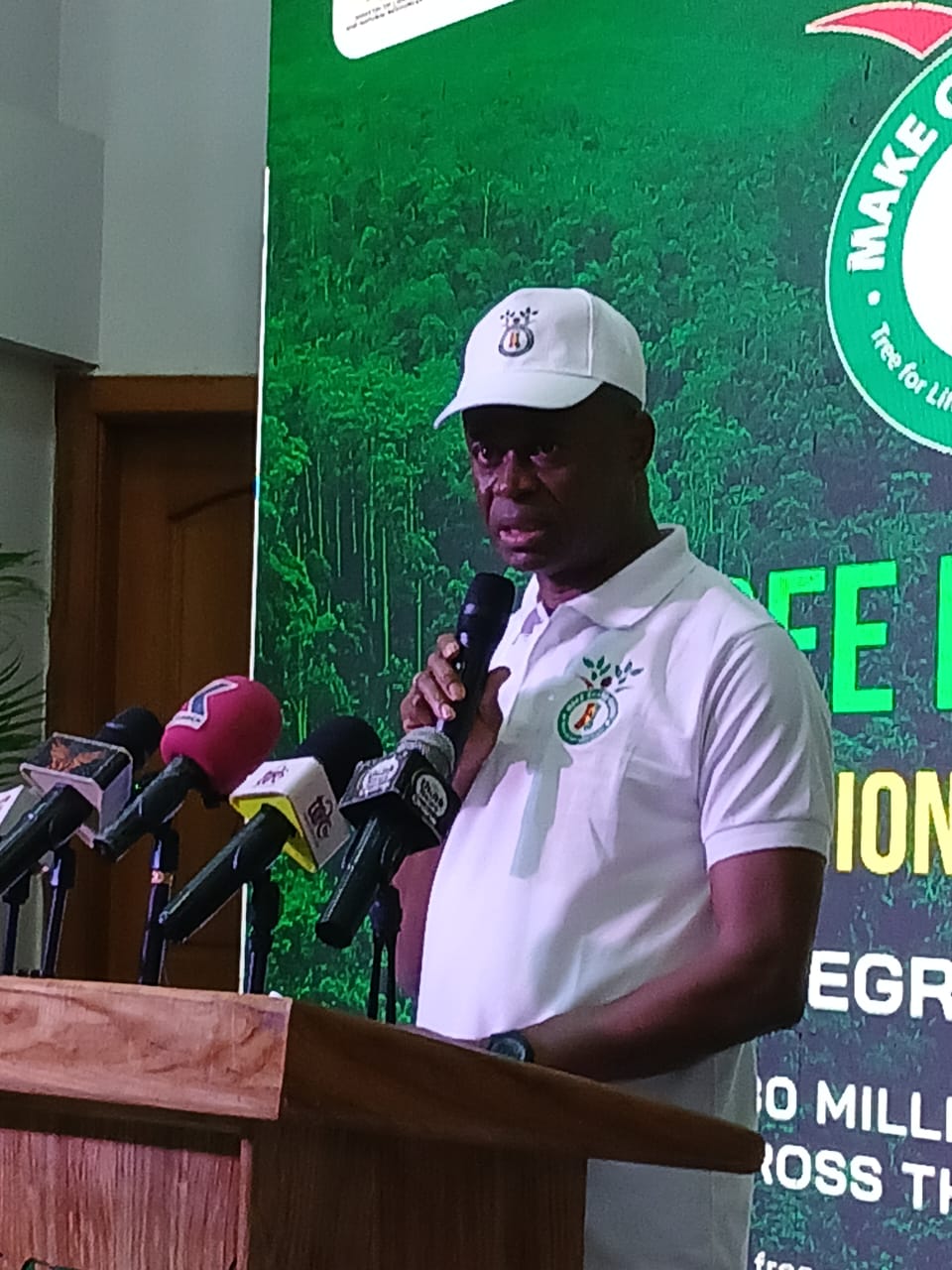
Speaking on behalf of the Ministry of Lands and Natural Resources, Deputy Minister Hon. Alhaji Yusif Sulemana emphasized that the initiative represents a broad and inclusive national effort. He noted that the presence of the diplomatic community was a profound affirmation of the shared global commitment to protecting the environment.
Launched in March 2025, the Tree for Life Initiative aims to plant no fewer than 30 million trees across all regions of the country this year.
In addition, the Ministry is rolling out the Blue for Water Initiative, which focuses on restoring polluted water bodies to their natural states.
According to Hon. Sulemana, the objectives of the Tree for Life campaign include:
Raising awareness about environmental conservation
Enhancing biodiversity through ecosystem restoration
Promoting sustainable livelihoods via green jobs in agroforestry, ecotourism, and aquaculture
Integrating urban greening into city planning
Instilling environmental values in children and youth through school-based “Tree for Life” programs
He also addressed the government’s ongoing efforts to curb illegal mining, commonly known as galamsey, which has severely impacted river bodies and forest reserves. He outlined a five-point strategy: reforming the mining licensing regime, strengthening law enforcement, reclaiming degraded mining areas, providing alternative livelihoods to affected communities, and expanding stakeholder engagement and education. He added that he is appealing to the international community for financial and technical support in the fight against illegal mining.
After leading members of the diplomatic corps to plant trees, Dr. Hugh Clement Brown, Chief Executive Officer of the Forestry Commission, told the media that in partnership with COCOBOD, the government is supplying tree seedlings to cocoa farmers. Farmers are expected to plant 18 to 21 trees per hectare alongside their cocoa crops.
Dr. Brown added that the initiative includes direct landscaping by 2,000 youth engaged across the country. These youth are tasked with establishing 2,000 hectares of commercial plantations, contributing to the government’s broader goal of planting 20 million seedlings nationwide.
He noted that the private sector is also playing a crucial role, with a target of 7,500 hectares to be planted annually—complementing the government’s target of 12,500 hectares per year.
Through these concerted efforts, Ghana is making steady progress in forest restoration, citizen engagement, and building a more sustainable future in the fight against climate change.
Story by Osman Issah Abadoo