President John Dramani Mahama has declared sanitation a national development priority, calling for urgent and coordinated efforts across all levels of governance to address what he described as a “national emergency.”
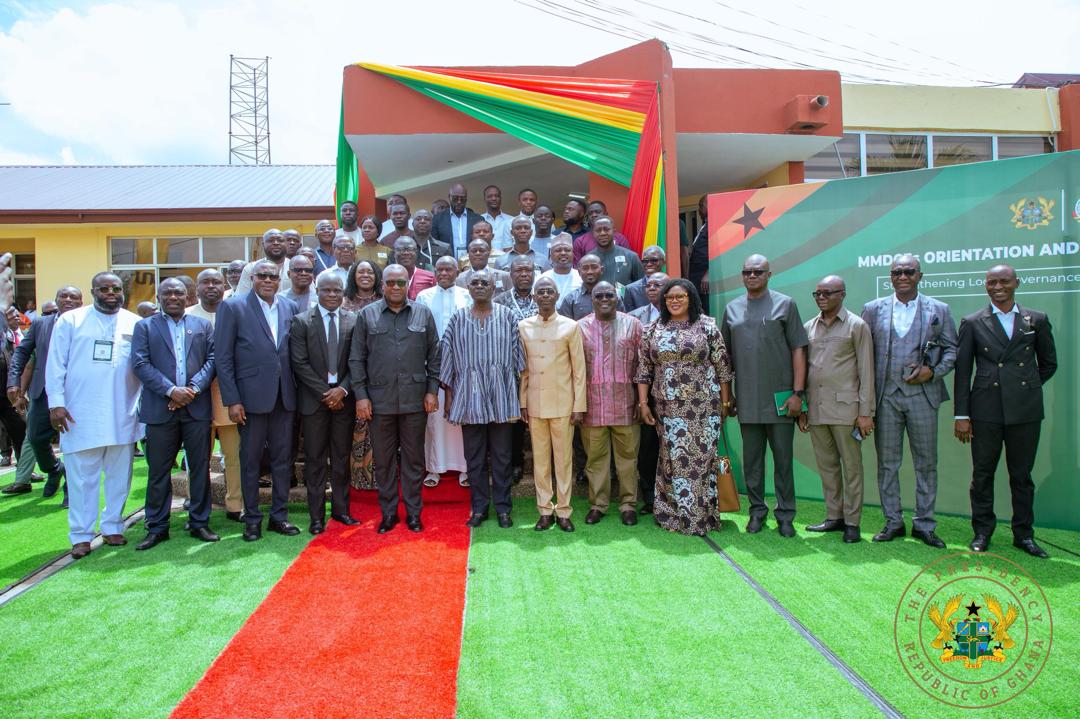
Speaking during the MMDCEs orientation programme in Accra, President Mahama announced the re-launch of the National Sanitation Day initiative, redefined as more than just a monthly clean-up exercise.
He said the new approach will become a citizen-led movement driving behavioral change, environmental health, and sustainable urban development.
“Sanitation is a national emergency that demands our urgent and immediate attention,” President Mahama said. “A filthy town is not merely an eyesore—it is a public health hazard and an indictment on leadership.”
He emphasized that MMDCEs will be judged by the cleanliness of their districts, making sanitation a central component of their Key Performance Indicators (KPIs).
Drawing on international examples from countries like Rwanda and Singapore, President Mahama said Ghana must learn from successful models that have turned waste into energy, revenue, and jobs.
“We must learn from these models. In these countries, waste is not a nuisance—it’s an opportunity. That is the mindset we need.”
New Sanitation Mandate for MMDCEs
President Mahama unveiled a comprehensive mandate for all MMDCEs, tasking them to:
Establish District Sanitation Taskforces with clearly defined roles and mechanisms for regular performance assessments.
Mobilize schools, faith-based organizations, and market groups for sanitation education, cleanup campaigns, and inspection exercises.
Partner with the private sector to develop sustainable recycling value chains, particularly in waste-to-energy initiatives.
Strictly enforce sanitation bylaws, including penalties for illegal dumping, open defecation, and improper waste disposal.
“You are required to partner with the private sector for waste-to-energy processing and sustainable recycling value chains,” he directed.
Sanitation Index and Public Accountability
In a major accountability step, President Mahama announced the creation of a National Sanitation Index, which will be incorporated into the Local Governance Performance Assessment Framework.
“Your district’s cleanliness, drainage, and hygiene infrastructure will be measured and published annually. The cleanest district will be celebrated—and the dirtiest will be shamed,” he warned.
The new index is intended to incentivize performance, promote innovation in local sanitation systems, and elevate public awareness and accountability.
President Mahama concluded by challenging MMDCEs to build a legacy around environmental sustainability.
“Let your legacy be a clean, green, and healthy economy,” he said. “This is not just about cleaning our streets—it is about building a new culture and future.”
The sanitation agenda is a core pillar of the administration’s Reset Agenda for local governance, linking health, environment, infrastructure, and economic opportunity in the transformation of communities across Ghana.