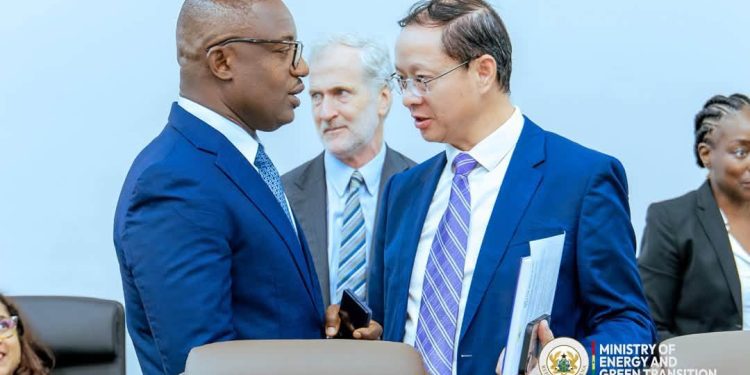
Government is positioning reforms in the energy sector as a critical pillar of Ghana’s broader economic transformation agenda, with Energy and Green Transition Minister, Dr John Jinapor, highlighting investments in power distribution, transmission and battery storage.
Speaking at a national consultation on Ghana’s Country Partnership Framework (CPF) 2027–2032 with the World Bank Group, Dr Jinapor said the reforms are intended to address persistent challenges in the energy sector and provide a more reliable electricity supply to support economic activity.
The consultation brought together senior government officials, including the Ministers for Finance, Trade and Industry, and Roads and Highways, to deliberate on Ghana’s development priorities and shape the country’s next phase of engagement with the World Bank Group.
The CPF is expected to serve as the framework for aligning World Bank support with Ghana’s development priorities while mobilising financing and technical resources to accelerate economic transformation.
Dr Jinapor said the consultation offered an opportunity to assess the country’s progress, confront existing challenges and define the kind of economy Ghana seeks to build over the next six years.
He welcomed the World Bank Group’s recognition of what he described as progress in restoring economic stability and advancing economic transformation under President John Dramani Mahama.
Energy sector reforms
A key focus of the Minister’s presentation was government’s efforts to improve the financial and operational performance of the energy sector.
Dr Jinapor cited what he described as prudent management of the cash waterfall mechanism, alongside reforms within the electricity distribution sector.
He also pointed to investments in Ghana’s power transmission infrastructure, aimed at strengthening and modernising the national grid.
The reforms come against the backdrop of longstanding concerns over the financial sustainability of Ghana’s energy sector, as well as the reliability and resilience of electricity supply.
Government is also introducing Battery Energy Storage Systems (BESS) as part of measures to manage peak electricity demand.
According to Dr Jinapor, the deployment of battery storage will help improve the reliability and resilience of the national power system while supporting efforts to meet periods of high demand.
World Bank partnership
For government, the significance of the CPF consultation extends beyond securing development financing.
The framework is expected to determine how World Bank resources and programmes are aligned with Ghana’s economic priorities between 2027 and 2032, making the consultation an important opportunity for government to influence where development support is directed.
Dr Jinapor expressed confidence that continued cooperation with development partners would enable Ghana to consolidate the gains made so far and create new opportunities for citizens.
The broader objective, he said, is to ensure that Ghana’s partnership with the World Bank Group is closely aligned with the country’s long-term development ambitions.
With energy reliability remaining closely linked to industrial growth, business competitiveness and investment, the reforms outlined by the Energy Minister could become an important test of government’s ability to translate economic stabilisation into sustained improvements in the productive sectors of the economy.
The CPF 2027–2032 will therefore provide a key roadmap for Ghana’s next phase of collaboration with the World Bank Group, with energy, infrastructure and economic transformation expected to remain central to the country’s development agenda.