President John Dramani Mahama has reaffirmed Ghana’s commitment to strengthening surgical capacity and regional health cooperation, stressing that access to quality surgical care must not be determined by geography or income.
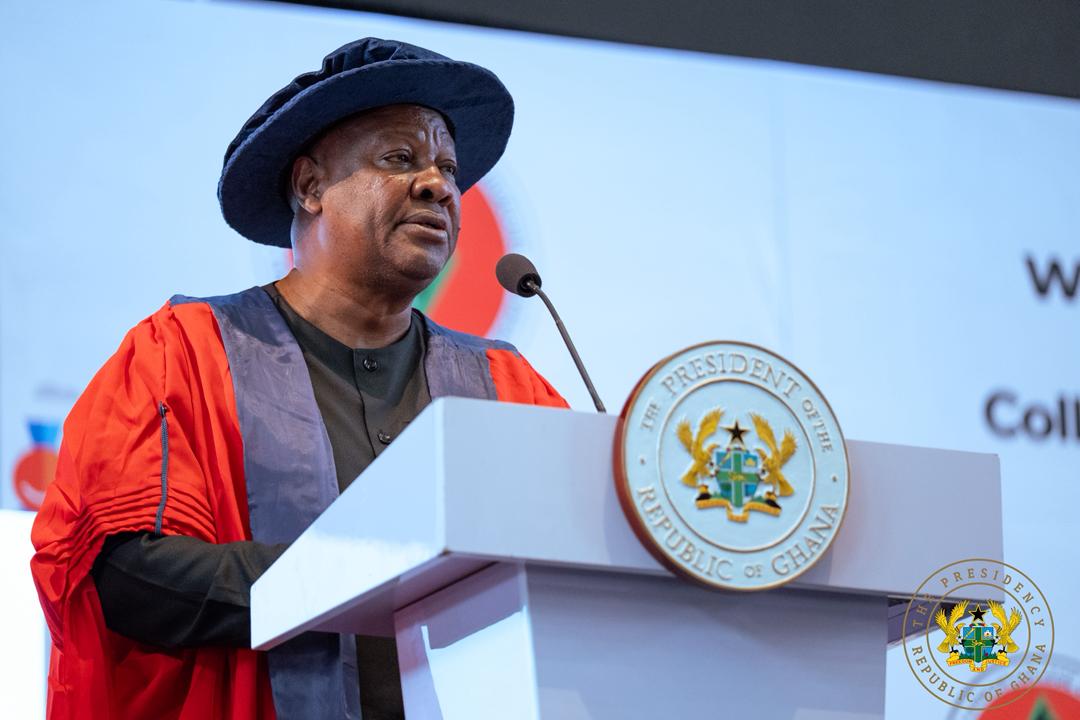
Speaking at the Conference of the West African College of Surgeons (WACS) in Accra, President Mahama warmly welcomed delegates from across West Africa, the wider African continent, and beyond, describing the gathering as a symbol of shared regional aspirations and enduring international partnerships.
“This conference addresses a professional community that transcends national borders and reflects our shared regional aspirations,” the President said. “The work of surgeons is inseparable from the health, dignity, and productivity of our people.”
President Mahama expressed gratitude to the College for naming him Grand Patron of the conference and admitting him as an Honorary Fellow, saying he accepted the honour “with humility and renewed commitment” on behalf of the people of Ghana.
He also commended volunteer surgeons who have undertaken outreach programmes across the country, pledging government support to settle outstanding costs associated with their work.
“We will take up that cost as an expression of our appreciation for what you have done for the people of Ghana,” he assured, noting that he had already discussed the matter with the Minister for Health.
Highlighting the role of WACS in regional development, President Mahama praised the institution’s long-standing contribution to training surgeons across West Africa, describing it as a key pillar of ECOWAS’ spirit of cooperation.
“Over the decades, the College has produced a significant proportion of the surgeons serving across our countries,” he said, conveying “the appreciation of governments and peoples across our entire sub-region.”
The President paid tribute to pioneering figures who laid the foundation of the College, including Dr. Victor Anomah Ngu and Sir Samuel Manuwa, as well as eminent Ghanaian and West African surgeons whose mentorship and scholarship strengthened specialist training.
In an emotional moment, President Mahama recalled the late Professor John Kwateboi Mamon and his colleagues, Dr. Isaac Bensi and Dr. Benjamin Osei-Bi-Afi, who lost their lives while returning from a surgical outreach programme in Sunyani.
“Their sacrifice remains a powerful reminder of our collective duty to build systems in which access to specialised care is not determined by geography,” he said.
Addressing the conference theme of capacity building in surgery, President Mahama stressed that training more surgeons alone was not sufficient.
“Capacity building must be understood comprehensively,” he explained.
“It includes anaesthesia, nursing, diagnostics, blood services, critical care, and reliable referral pathways, supported by strong clinical governance and regulation.”
He said government would carefully study recommendations from the conference and work with stakeholders to implement those requiring immediate action, while planning longer-term reforms within existing fiscal constraints.
President Mahama also called for innovative financing models, responsible private sector participation, and deliberate efforts to support newly trained professionals to establish services in underserved communities.
On gender equity, he urged the College to continue promoting female participation in surgical training and leadership.
“Gender equity is not only a matter of fairness, but a practical necessity for stronger and more resilient health systems,” he noted.
The President welcomed the College’s growing embrace of technology, including artificial intelligence and digital tools in training and clinical practice, describing innovation and research as critical to evidence-based medicine and better patient outcomes.
He also raised concern about the renewed migration of skilled health professionals from the sub-region, calling for improved working conditions, career pathways, and structured engagement with the diaspora.
Reiterating Ghana’s commitment to universal health coverage, President Mahama highlighted the Ghana Medical Trust Fund as a key intervention to address non-communicable diseases.
“Financial risk protection is essential to ensure that illness does not lead to avoidable hardship for families,” he said.
He concluded by commending the West African College of Surgeons for its dedication to excellence and urging participants to develop solutions that could be scaled across diverse health systems in the sub-region.
“While your engagements will be intensive, I trust you will also experience Ghana’s warmth and hospitality,” President Mahama added.
The conference brings together surgeons, educators, researchers, and policymakers to deliberate on strengthening surgical care and specialist training across West Africa.
Story: Patrick Asford Boadu