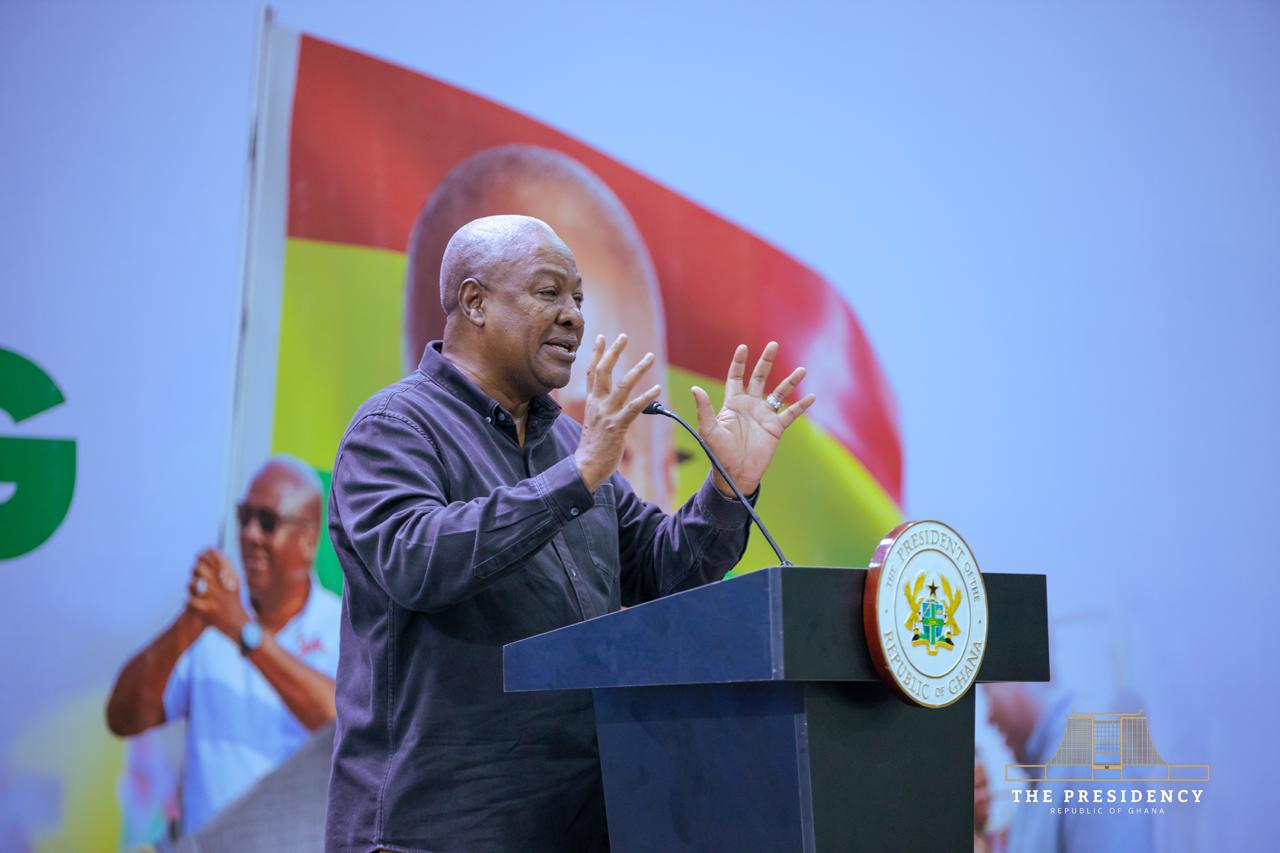
President John Dramani Mahama has directed the immediate addition of the Kolobu-Naga Road to the government’s list of priority road projects under the Big Push programme.
He also directed the Minister for Education to ensure that Kolobu gets a Senior High School, following an appeal made by a traditional leader during the question-and-answer session at the Resetting Ghana Community Engagement in the Upper East Region.
Responding to the appeal, President Mahama said the request had been accepted as a presidential directive.
“You are therefore directed to add it to the list. It is a presidential directive. In front of all these witnesses, you are directed to add the Kolobu-Naga Road to the list.”
He subsequently instructed the Education Minister to provide a secondary school for the community. “The Minister of Education is also directed to ensure that Kolobu gets a senior high school.”
The President said the interventions formed part of the government’s broader commitment to expanding infrastructure and development opportunities across the northern parts of Ghana.
Mahama vows to formalise mining in Upper East
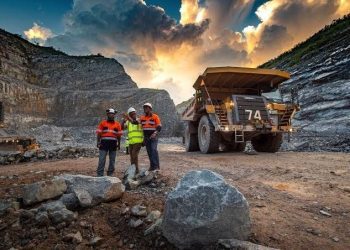
President Mahama also disclosed that government was working to identify areas with significant mineral deposits in the Upper East Region to establish formalised mining operations.
He said formal mining would create jobs for young people while allowing government to exercise greater control over environmental protection and land reclamation.
“The Upper East Region has great potential for mining, particularly gold mining, and the Minerals Commission is working to identify all the possible concessions so that we can establish formalised mines in those areas.”
The President distinguished between formalised mining and illegal small-scale mining, explaining that formal mining companies are required to provide reclamation bonds.
“When they finish mining, they are required to restore the land to its original state, after which they take their money back.”
He said government would continue its efforts to combat illegal mining, noting that the National Anti-Illegal Mining Operations Secretariat had seized excavators and other equipment used in illegal mining.
President Mahama acknowledged the difficulties involved in completely eliminating illegal mining but said government would remain committed to the fight.
“You cannot completely ban illegal mining. You can continue chasing the operators and taking other measures to deal with the problem.”
He said almost 49 forest reserves that had been invaded by illegal miners had been cleared, with government now deploying military personnel to protect reclaimed forest reserves from renewed encroachment.
“We will not give up. We will continue the fight against illegal mining.”
The President said the Upper East had an advantage because much of its gold was found in rock formations, which he said caused less environmental destruction than some forms of alluvial mining in southern Ghana.
Technology contributing to indiscipline among students
Addressing concerns about indiscipline in schools, President Mahama said the widespread use of technology and social media had introduced new challenges for parents, schools and society.
He said children today had access to information and content that previous generations could not have imagined.
“When you give your child a phone, know that you are opening him or her up to both positive and negative influences.”
The President said parents must therefore exercise greater oversight over the use of mobile phones and digital platforms by children.
He disclosed that government was considering measures to restrict children under 16 from accessing certain online sites.
“If we do that, it will help to protect our children.”
President Mahama also expressed government’s willingness to give faith-based organisations greater involvement in managing schools they established.
“We are not averse to faith-based organisations having a greater say in how their schools are managed.”
Mahama calls for stronger occupational safety standards
The President also stressed the need for improved occupational health and safety practices across all sectors of the economy.
He said safety was not limited to factories and industrial facilities but was equally important in agriculture, mining, construction and other economic activities.
“Safety is important in every economic activity, not only in factories but also in agriculture and in the way we handle pesticides.”
He cautioned farmers against improper handling of pesticides, warning that failure to follow safety procedures could harm farmers, contaminate crops and eventually endanger consumers.
He further called for strict adherence to safety guidelines when operating heavy-duty machinery.
“If you are going to move the machine, you must blow the horn so that anybody around will move away before you move.”
President Mahama said government was working with organised labour, including the Trades Union Congress, to strengthen occupational safety.
Government targets Northern Ghana with major investments
The President reiterated his administration’s intention to use the US$10 billion New Economy investment programme to address economic and geographical inequalities between northern and southern Ghana.
He said agriculture, mining and agro-processing would be central to the development strategy because they represent some of the North’s comparative advantages.
“If we are going to industrialise, we must industrialise based on our comparative advantages.”
He said the government would focus on developing processing capacity for agricultural products produced in the North, including shea.
“We have the shea industry, and we must build more shea-processing facilities.”
President Mahama said investments in irrigation, roads, agricultural extension services and farmer service centres would also be necessary to unlock the region’s productive potential.
“We must ensure that more water is provided and more roads are constructed so that we can evacuate food early.”
He said developing the North was also in the interest of southern Ghana because uncontrolled migration to the south was placing additional pressure on social services.
“It is therefore in the interest of the south for the North to develop so that our population can be balanced out.”
The President said his administration would deliberately increase investments in education, health and agriculture across the five northern regions.
Mahama explains plans to refresh Ghana’s currency
Responding to a question about the strength of the cedi following changes to Ghana’s currency notes, President Mahama explained that central banks periodically refresh currencies to strengthen security features and combat counterfeiting.
He said the current currency was overdue for such a refresh and indicated that the Bank of Ghana had plans in that direction.
“From time to time, therefore, you have to change the security features on the currency and refresh it so that it will take another five or six years for counterfeiters to determine the new security features.”
However, President Mahama maintained that the cedi had strengthened because of improved economic management.
“What I will say, however, is that the cedi today is stronger than it was in the past because of good economic management. Your currency is as strong as your economic management.”
He said government would continue implementing policies aimed at sustaining the stability of the currency and the broader economy.
“Because of the good policies we have put in place, the cedi is holding its own against other major currencies.”
The President said the Bank of Ghana Governor would announce any plans concerning the replacement or refreshing of the currency at the appropriate time.
Story: Patrick Asford Boadu