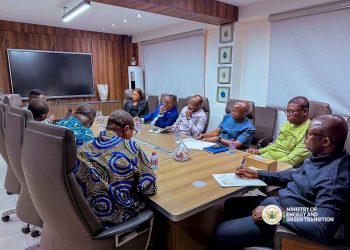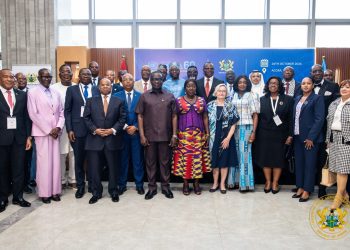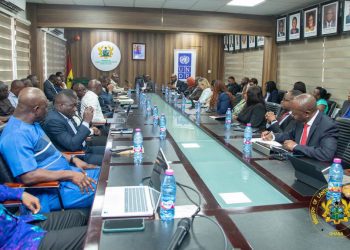
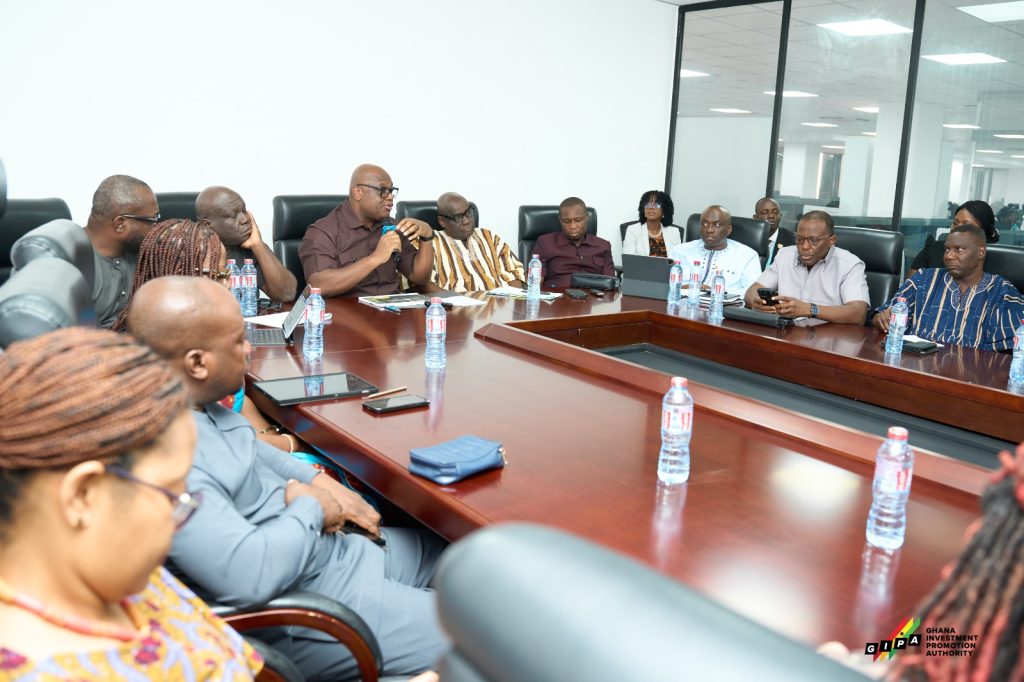
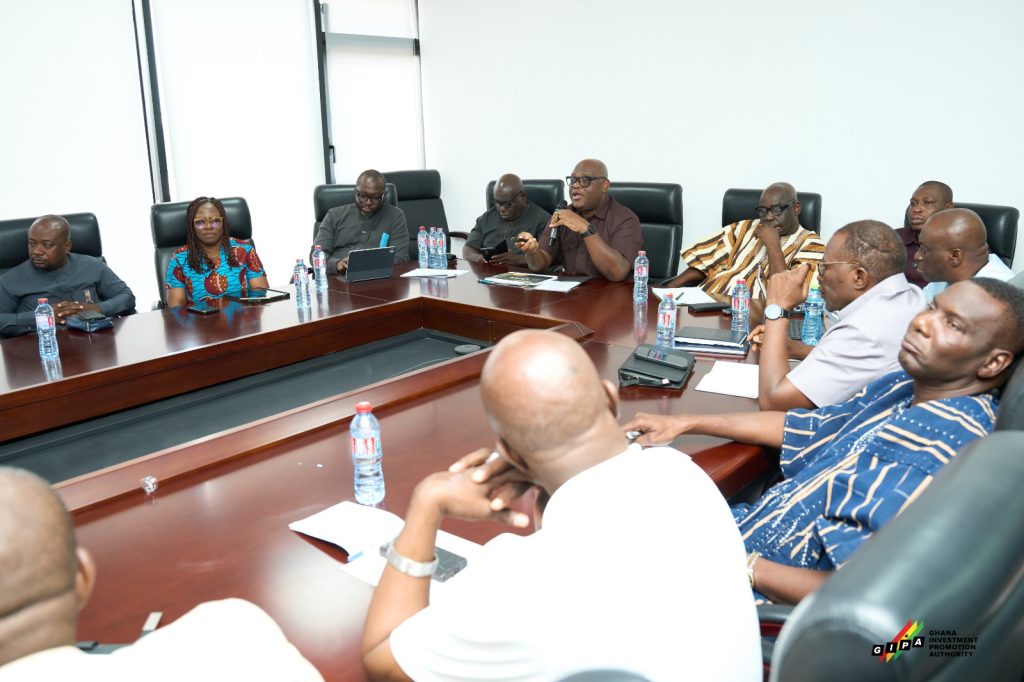
The Parliamentary Select Committee on Trade, Industry and Tourism, led by Hon. Alexander Hottordze Roosevelt, has paid a working visit to the Ghana Investment Promotion Authority (GIPA) to gain deeper insight into the Authority’s operations, legal reforms, challenges, and strategic direction for attracting investment into and within Ghana.
The engagement, held at GIPA’s office in Accra, featured a comprehensive briefing by GIPA Chief Executive Officer Mr Simon Madjie, who outlined the Authority’s mandate, evolving legal framework, operational performance, and priorities under the new investment regime.
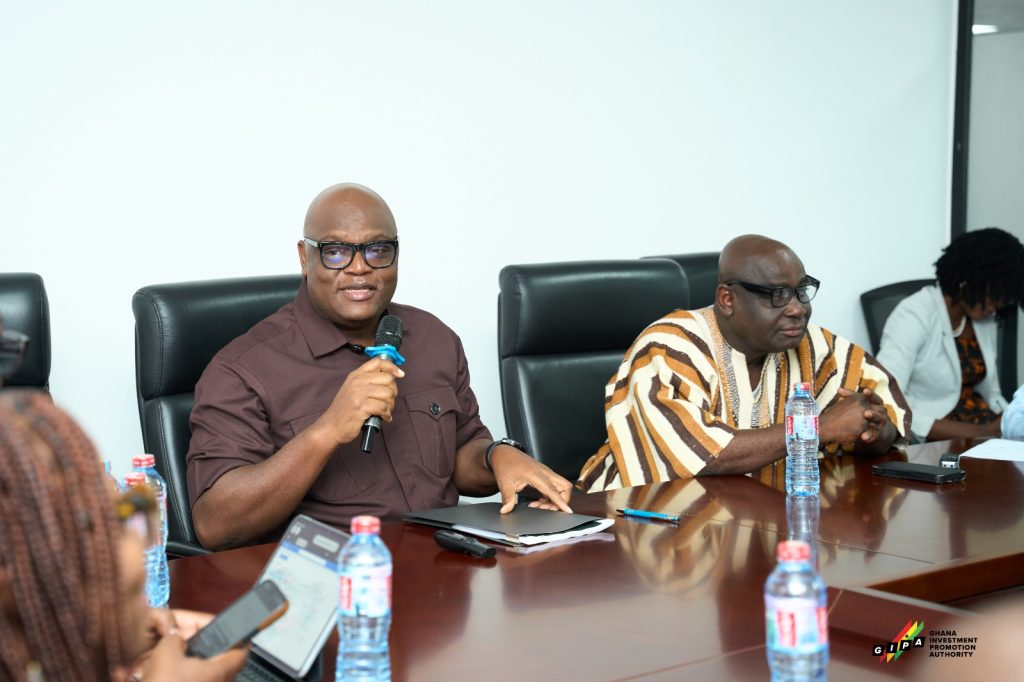
Overview of GIPA’s Mandate and Evolution
During his presentation, Mr Madjie traced the evolution of Ghana’s investment promotion architecture, from the Capital Investment Board established in the early 1960s, through the Ghana Investment Code under PNDC Law 116, to the Ghana Investment Promotion Centre (GIPC) Act of 1994 (Act 865), and subsequently Act 1173 of 2023, which established the GIPA.
He explained that Act 1173 has repositioned the institution as an Authority, reflecting both its promotional and regulatory functions. The law also strengthens GIPA’s mandate through three core pillars, such as promoting investment into Ghana, supporting investment within Ghana at the regional and district levels, and facilitating Ghanaian investment abroad, particularly within ECOWAS and under the African Continental Free Trade Area (AfCFTA).
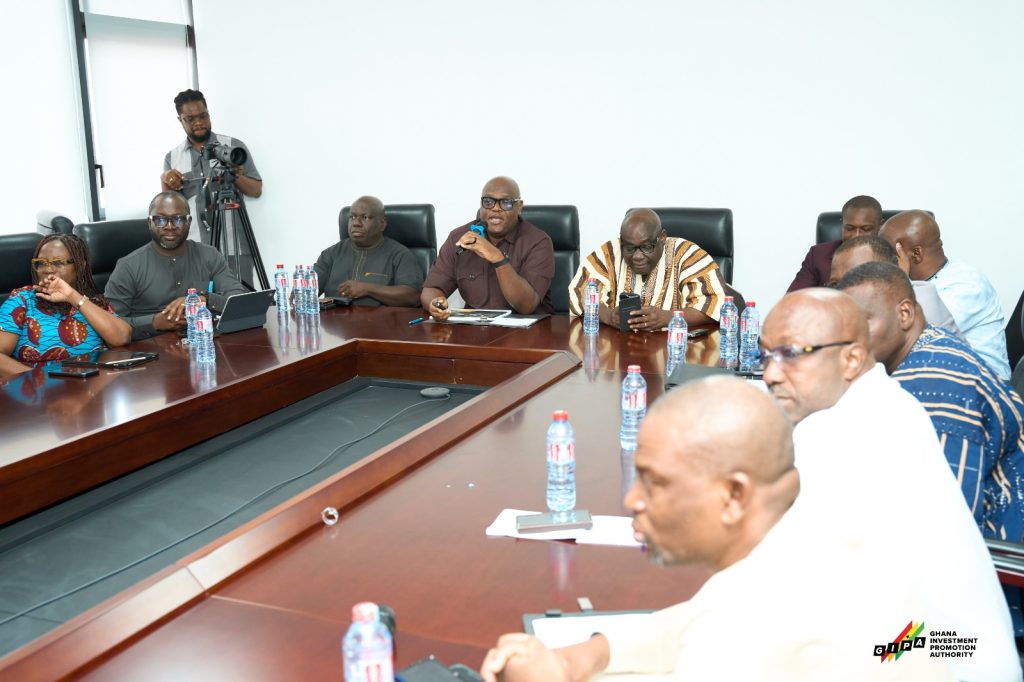
“Our vision is to provide investors with a seamless one-stop-shop experience, backed by accurate information and high-value facilitation services,” Mr Madjie said, highlighting the Authority’s efforts to advance the “Ghana is Open for Business” agenda and position the country as a preferred investment destination.
Mr Madjie also outlined key reforms introduced under Act 1173, particularly regarding minimum capital requirements and reserved sectors. He noted that the law removes the blanket minimum capital requirements of US$200,000 for joint ventures and US$500,000 for wholly foreign-owned enterprises, except in the trading sector.
Additionally, he said Ghana has built enough safeguards to protect local businesses from the removal of the blanket minimum capital requirement for foreign investors, including strong local content regulations, sector-specific financial requirements, and specific economic activities reserved for Ghanaians, among others.
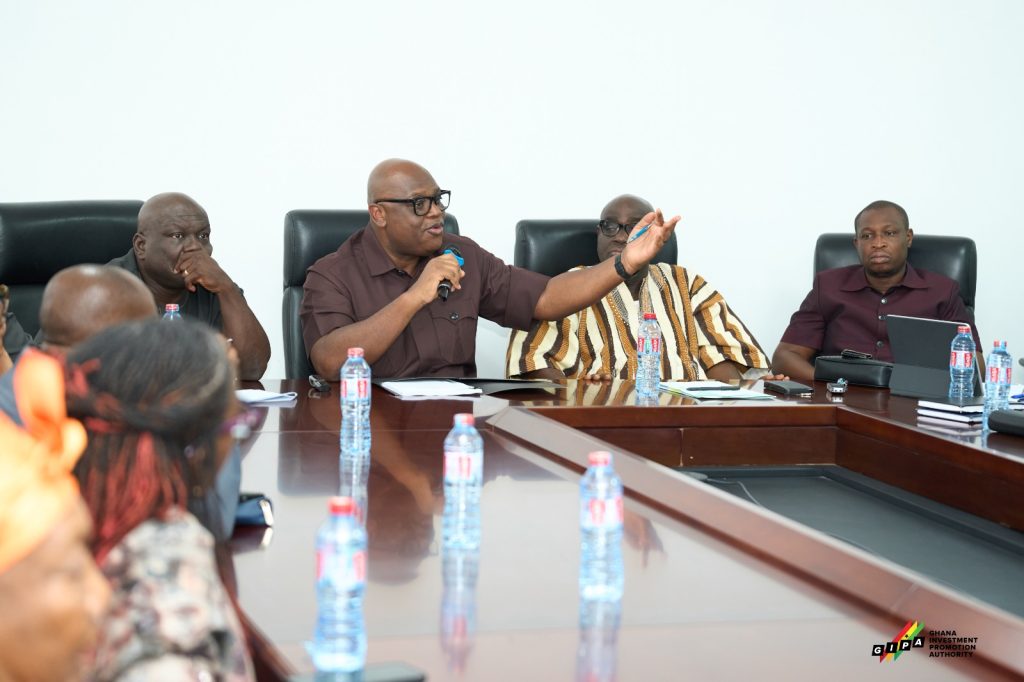
Therefore, “the absence of a blanket minimum capital requirement does not mean investors can enter with no capital. It simply means we will assess capital adequacy by sector,” he emphasised.
Additionally, he said that local content requirements and sector-specific regulations in industries such as mining, petroleum, power, insurance, and fintech under the new law will provide more targeted mechanisms for ensuring Ghanaian participation than generic capital thresholds.
According to Mr Madjie, the reforms also align Ghana’s investment framework with the AfCFTA Protocol on Investment, enhancing the country’s competitiveness relative to jurisdictions that maintain blanket minimum capital requirements.
Investment Performance and Regional Outreach
Mr Madjie further briefed the Committee on GIPA’s investment performance and domestic participation efforts. Since 1994, the Authority has registered more than 7,160 investment projects with a cumulative foreign direct investment (FDI) value exceeding US$62 billion.
He highlighted GIPA’s growing focus on regional investment promotion through initiatives such as regional investment roadshows under the Investment Opportunity Mapping Project (IOMP), documentaries showcasing investment opportunities across the regions, and the expansion and refurbishment of regional offices to better support investors closer to project locations.
Beyond these, Mr Madjie requested the Committee’s assistance in operationalising the citizenship-by-investment provisions under Act 1173, in collaboration with the Ministry of the Interior. The initiative is expected to attract high-net-worth investors through structured residency and eventual citizenship programs.
Mr Madjie also sought support to develop and enforce regulations on technology transfer to ensure investment projects deliver meaningful skills and knowledge transfer to Ghanaian partners.
He also called for stronger enforcement of reserved sectors for Ghanaians, particularly in informal retail trade, taxi services, and small-scale pharmaceutical retail, where local industry groups continue to raise concerns.
Committee Pledges Support
Responding to the issues raised, Hon. Alexander Hottordze Roosevelt acknowledged GIPA’s strategic role in advancing Ghana’s economic transformation agenda and underscored the importance of adequately resourcing the Authority.
He pledged the Committee’s support in facilitating constructive engagement to ensure GIPA is empowered to effectively discharge its expanded responsibilities under the new investment law.
Members of the Committee also commended the Authority for promoting Ghana’s investment opportunities both locally and internationally, as well as for its progress in implementing reforms under Act 1173.
They further expressed support for initiatives aimed at improving the investment climate, strengthening investor confidence, and enhancing Ghana’s competitiveness in attracting quality investments.
-ENDS-