The Ministry of Trade, Agribusiness and Industry has presented a bold, ten-year policy plan to revive Ghana’s textiles and garments sector, promising to transform the industry into a major source of jobs, investment, and export growth. The plan was shared during a stakeholder validation workshop held on Wednesday, August 6, 2025, at the Ghana EXIM Bank Conference Room in Accra. The session brought together policymakers, development partners, industry players, and trade experts to review and give final input into the draft Ghana Textiles and Garments Manufacturing Policy.
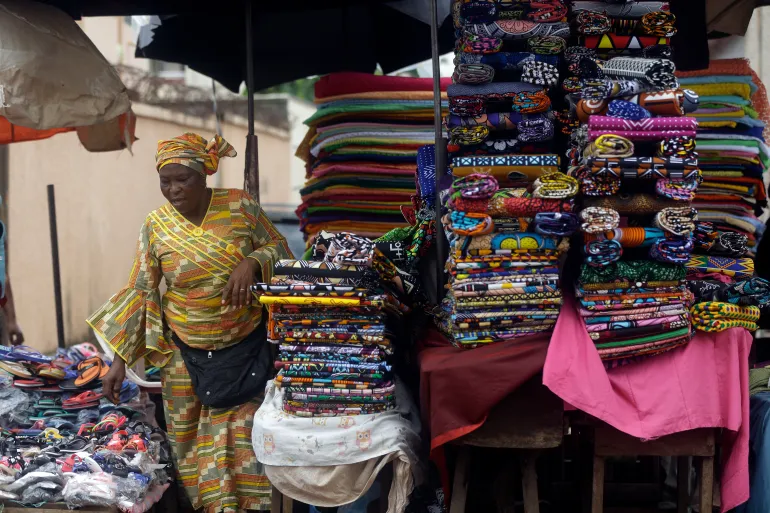
According to the Ministry, Ghana’s textiles and garments sector was once one of the country’s biggest employers after agriculture. In the 1970s, the country had 16 medium to large-scale textile companies and 138 garment manufacturers. But due to inconsistent government support, increasing competition from China, and limited investment in modern infrastructure, the sector saw a steep decline. Today, only four major textile firms are still operating in the country, and most are performing below their potential.
The new policy aims to change that. Government officials say the policy will create over 150,000 direct and indirect jobs, attract $1.2 billion in new investments, and grow the sector to a value of $2 billion by the year 2033. In addition to increasing factory output, the plan seeks to revive cotton farming by expanding the area under cultivation from 15,000 hectares to 50,000 hectares. Officials believe this will help Ghana build a vertically integrated value chain that stretches from cotton production to final garment export, positioning the country as a global sourcing hub.
The Ministry explained that the policy is grounded in nine strategic focus areas. These include tax incentives for investors, establishment of specialized industrial parks, access to affordable utilities, upgrading of textile machinery, and the creation of a Textile Upgradation Fund. There are also plans to set up a Cotton Development Fund to support raw material cultivation and to attract private investment into cotton processing and upcycled fabric production. Under the plan, new companies setting up factories will be granted zero-rated duties on imported machinery and inputs for the first two years, as well as concessional power tariffs and land access at reduced cost.
In his remarks, deputy minister for Trade, Agribusiness and Industry, Hon. Samson Ahi said the policy is more than a vision document. It includes real, time-bound actions to change the face of the industry. For instance, the government plans to work with private developers to establish five dedicated industrial parks with “plug-and-play” factory infrastructure, ready for medium to large garment manufacturers to move in quickly. These parks will include shared services such as power plants, water systems, and waste treatment facilities. Investors in these parks will also benefit from a 25% capital subsidy on infrastructure development and access to loans at low interest rates.
The presentation also focused on building the human capital needed for growth. The government plans to train thousands of young people in garment production, fabric design, and factory operations. Training incentives will be provided to firms that hire more than 1,500 workers, covering the basic wages of unskilled workers and their social charges for up to two years. The Ministry also committed to strengthening the Apparel Training and Service Centres, establishing new facilities at the regional level, and partnering with international agencies for continued skills development.
Another major theme was trade facilitation. The policy proposes reforms to make it easier and cheaper for textile and garment companies to import raw materials and export finished products. These include streamlining customs processes at ports, creating fast-track clearance channels for registered manufacturers, and reducing hiring restrictions on foreign experts needed to train Ghanaian staff and operate specialized machinery. The government will also lobby the United States for a 10-year extension of the African Growth and Opportunity Act (AGOA), which provides Ghana with duty-free access to U.S. markets.
The policy takes environmental and social factors into account. It promotes ethical labour practices, gender inclusion, and environmental sustainability. Ghana plans to build a PET recycling plant to convert plastic waste into polyester for garment production. Additionally, standards for building safety, textile testing, and eco-friendly operations will be strengthened through the Ghana Standards Authority.
To make coordination easier, a new Textile and Garment Sector Development Unit will be created within the Ministry. This unit will act as a one-stop shop for investors and will monitor progress under the new policy. The unit will also help promote foreign direct investment by preparing investor packages, organizing outreach visits abroad, and arranging investor missions to Ghana.
The policy is expected to run for ten years, with a review every five years to allow for updates and changes based on market conditions. The government says the long-term nature of the policy will give investors confidence and help Ghana rebuild one of its most iconic industries.
By: Victor Lavor