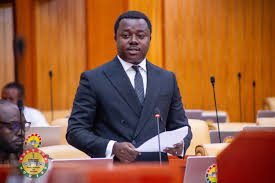
The Ranking Member on the Finance Committee of Parliament, Dr. Cassiel Ato Forson says Ghana’s economy was in intensive care and required urgent attention.
According to the Member of Parliament for Ajumako – Enyan Essiam Constituency of the Central Region, the policies and estimates in the 2022 budget cannot deal with the difficulties imposed by Ghana’s growing debt because they are not credible and realistic.
“Revenue for the last quarter of 2021 is over estimated by about GHC 3 billion compared to that of 2020, signaling that our debt situation could be worse than anticipated by end of year 2021. For 2022, revenue is over estimated by about GHC10 billion, equivalent to 2% of GDP, pushing the fiscal deficit for 2022 to almost 10% of GDP with a negative Primary Balance,” he indicated.
The former Deputy Minister for finance was contributing to the debate on the 2022 budget statement on the floor of parliament on Tuesday 23rd November 2021.

Government is unable to raise money to cater for basic expenditure without borrowing.
In other to turnaround the situation, government is proposing tax measures aimed at increasing government’s revenue.
The measure that has attracted a lot of attention is the E-levy which would impose 1.75 percent tax on electronic transactions.
The Ajumako – Enyan Essiam Legislator said the E-levy is “likely to discourage the much needed remittances that have become the life wire of our struggling currency and drive the remittances market aground”.
“Any attempt to tax it will discourage Ghanaians in the diaspora from using the formal channels of transfer and encourage underground activities in the remittances market and also discourage Foreign Direct Investment (FDI),” he emphasized.
Dr. Ato Forson further indicated he was not aware of any country in the world where taxes were imposed on the principal amount involved in a Bank Transfer.
The Electronic Levy would also be imposed on banking transactions, a move Dr. Forson is convinced will be inimical to the growth of the banking sector and counterproductive. He fears the policy direction is likely to send Ghana back to the cash economy of the 1980s and weaken the banking sector.
The Ranking Member on Parliament’s finance committee was also of the opinion that taxing mobile money transactions is “super regressive and will impose unbearable hardship, pain and suffering on poor Ghanaians”.
“We are aware that most traders and ordinary Ghanaians use mobile money wallet as savings account, therefore any attempt to impose a tax on mobile money transactions will be a tax on savings, a disincentive to save, which should never be encourage”.
The other tax measures that Dr. Ato Forson is worried about are the removal of the discount on Benchmark Values and the 15% increase in Public Sector Service Fees and Charges.
The former deputy minister says the two tax measures will be inflationary indicating that the proposed policy measures could increase prices of goods and services by at least 25% – 30% and further increase the already high cost of living, rising unemployment and poor economic growth.
According to him, government had the opportunity to address the huge debt overhang by accessing the Debt Service Suspension Initiative by the IMF under which Ghana’s debt servicing obligations will be suspended to give the country some much-needed breathing space.
He has therefore urged government “to seek the right prescription and dosage for the “sadoses” and for the Finance Minister to ignore the politics and save Ghana by seeking external help through the G20s Common Framework beyond the Debt Service Suspension Initiative in dealing with our debt overhang.”
Story: Henry George Martinson/Radiogoldlive.com