The government has announced plans to establish four garment manufacturing factories across Ghana in 2027, with the facilities projected to create approximately 36,000 direct jobs when operating at full capacity.
Minister for Trade, Agribusiness and Industry, Elizabeth Ofosu-Adjare, says the factories will be located in the Central, Bono East, Eastern and Greater Accra regions, with employment opportunities expected to benefit predominantly young people and women.
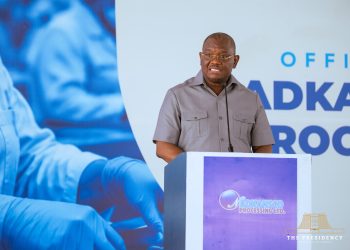
Speaking at the maiden Invest Ghana Summit 2026 in Accra, the Minister disclosed that Cabinet had approved industrial policies targeting textiles and garments, pharmaceuticals, automotive components and agribusiness as part of efforts to strengthen Ghana’s manufacturing capacity.
She explained that the government’s industrialisation agenda was designed to expand domestic production, reduce dependence on imports and create investment opportunities across strategic sectors.
Beyond garments, Mrs Ofosu-Adjare announced plans to establish pharmaceutical manufacturing hubs to reduce Ghana’s reliance on imported medicines.
In the automotive industry, she said the government was pursuing a components manufacturing hub to enable vehicle assembly companies operating in Ghana to source more parts locally.
The Minister also outlined plans for an integrated sugar development estate that would combine sugarcane cultivation, milling and refining within a coordinated production system.
In the oil palm industry, she disclosed that the government was developing a production model linking central processing facilities to between 30,000 and 40,000 smallholder households through guaranteed purchasing arrangements.
According to her, the approach would provide farmers with reliable markets while ensuring processors receive sufficient raw materials to sustain production.
Mrs Ofosu-Adjare emphasised that the projects were open to private sector participation, inviting investors to explore opportunities in manufacturing, agro-processing and industrial infrastructure.
She maintained that the government’s New Economy Programme provided a framework for directing investment into productive sectors, while her ministry would support investors through industrial policy, market access, standards and assistance with operational challenges.
The announcement comes as Ghana seeks to translate improvements in its economic performance into increased industrial production, employment and export competitiveness.
The Invest Ghana Summit, organised through the Ghana Investment Promotion Authority in collaboration with the Ghana Export Promotion Authority and Ghana Free Zones Authority, brings together investors, policymakers and business leaders to explore investment opportunities and partnerships.
The two-day gathering focuses on Ghana’s economic transformation agenda, with particular attention to manufacturing, agribusiness, infrastructure, energy, trade and other sectors considered critical to sustainable economic growth.
Mrs Ofosu-Adjare assured prospective investors that her ministry would work to address practical challenges affecting their operations, stressing that the success of Ghana’s industrialisation programme would depend on businesses being able to invest, produce and compete effectively.