President of the Dangote Group, Aliko Dangote, has challenged Ghanaian business leaders to take the lead in financing the country’s industrial transformation, warning that dependence on foreign investors without strong domestic investment will undermine efforts to build a productive economy.
He argues that international investors are unlikely to commit substantial resources to an economy where local entrepreneurs are unwilling to invest their own capital, insisting that Ghana’s economic transformation must be driven primarily by Ghanaians.
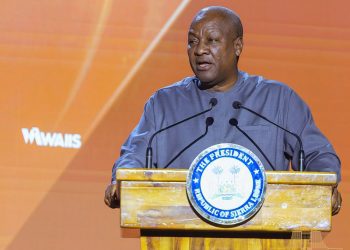
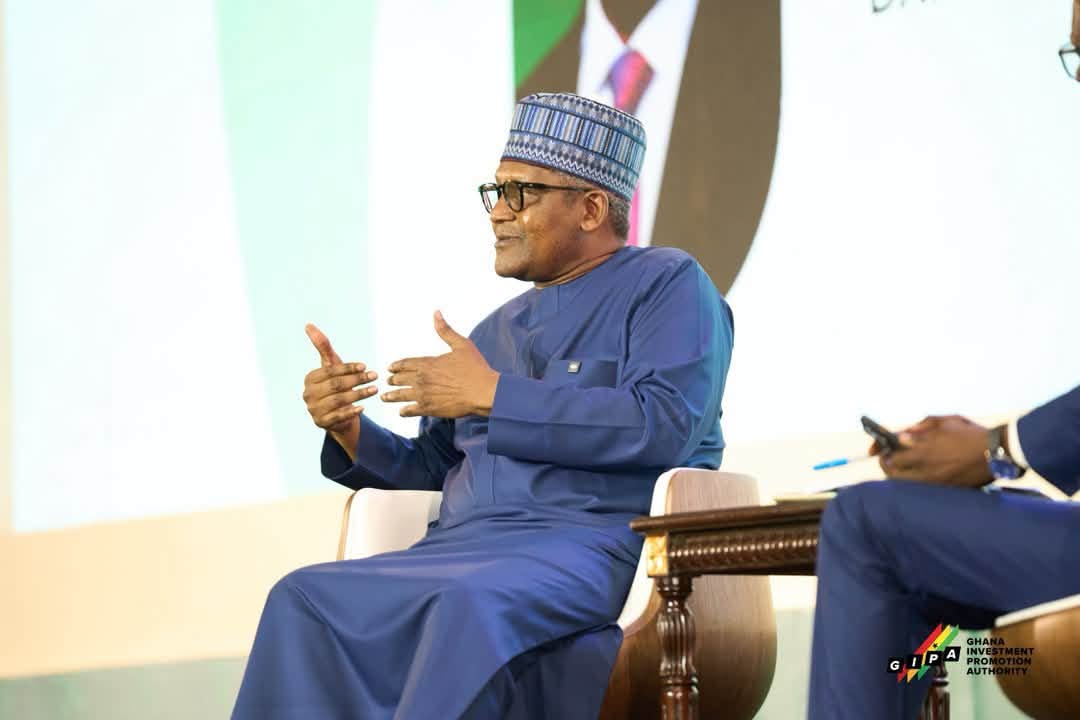
Speaking at the maiden Invest Ghana Summit 2026 in Accra, the Nigerian industrialist criticised the tendency of African countries to depend on foreign investment pledges that frequently fail to translate into actual projects.
According to him, major international corporations sometimes announce ambitious investments at elaborate ceremonies, raising public expectations, only for the proposed projects to fail to materialise.
He observed that when such commitments collapse, governments often bear the public criticism, even when the failure lies with the investors.
“What attracts an investor, a foreign investor, is domestic investment. Ghanaians must lead in this trajectory,” he added, urging local entrepreneurs to demonstrate confidence in the economy by investing in productive businesses.
Mr Dangote also criticised the practice of African businesspeople keeping substantial financial resources abroad instead of directing them towards industrial development on the continent.
He argued that retaining and investing African capital within African economies would strengthen domestic industries, generate employment and encourage international investors to follow.
The businessman further urged Ghanaians to support locally manufactured products, describing domestic consumption as an essential foundation for industrial expansion.
He maintained that promoting Made-in-Ghana goods should be a priority, followed by greater support for products manufactured elsewhere on the African continent.
According to him, local industries cannot expand, create sustainable employment or contribute meaningfully to economic growth without sufficient demand for their products.
Mr Dangote also called for measures to protect domestic industries against competition that could undermine their development.
“No protection, no growth and no prosperity at all,” he stated, arguing that countries that successfully industrialised had actively supported the development of their domestic productive sectors.
He cited India, the United States and the Asian economies as examples of countries whose industrial progress had depended significantly on domestic enterprise.
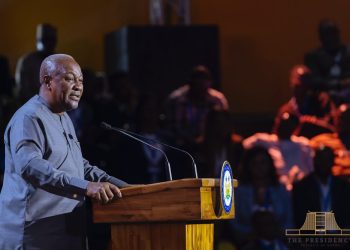
Turning to Ghana’s economic agenda, Mr Dangote commended President John Dramani Mahama’s vision for industrial transformation, particularly the emphasis on developing specific sectors of the economy.
He maintained that effective leadership required a clear development strategy supported by practical plans for implementation, rather than promises that could not be delivered.
However, he stressed that the success of the government’s industrialisation programme would depend on the willingness of entrepreneurs and other stakeholders to contribute to its implementation.
Mr Dangote also referred to a US$50 billion investment ambition by his business group across various sectors in Africa, explaining that the objective was to support industries capable of creating employment, expanding production and generating prosperity.
He expressed the hope that such investments would encourage other African businesses to increase their commitments to productive sectors.
The remarks come as Ghana seeks to attract investment into manufacturing, agribusiness, energy, mineral processing and other industries under the government’s New Economy Programme.
The Invest Ghana Summit brings together government officials, domestic entrepreneurs, international investors and financial institutions to explore opportunities for investment partnerships and industrial expansion.