Finance Minister Dr Cassiel Ato Forson has invited local and international investors to take advantage of Ghana’s planned US$10 billion public investment programme, declaring that the country is ready to expand domestic production, strengthen industrial capacity and compete more effectively in international markets.
He says the government’s New Economy Programme will create opportunities for private businesses across agriculture, energy, mineral processing, manufacturing, tourism and technology, with public investment intended to provide the infrastructure needed to support commercial expansion.
Addressing the maiden Invest Ghana Summit 2026, Dr Forson said the government was shifting its attention towards building a productive economy capable of generating employment, increasing exports and attracting long-term investment.
“Ghana is ready to produce more at home and sell more to the world,” he declared.
The Finance Minister explained that the 2027 Budget provides for planned public investment equivalent to US$10 billion over four years, including more than US$2.5 billion in 2027 alone.
According to him, the programme will focus on eight pillars, beginning with macroeconomic stability and affordable financing as the foundation for private sector growth.
Other priority areas include commercial agriculture, energy infrastructure, critical mineral value addition, tourism, culture and creative arts, textiles and garments, pharmaceuticals and biomanufacturing, and the technology economy.
Dr Forson emphasised that the government’s role would be to invest in essential infrastructure, including electricity, irrigation and transport systems, while creating conditions that enable private businesses to establish and expand productive enterprises.
He cited rice and sugar production as examples of sectors where public investment could unlock opportunities for commercial farmers, millers, processors, packaging companies and logistics providers.
The Minister disclosed that the government was proposing to increase public institutions’ purchases of locally produced rice and sugar, providing a potential market for manufacturers capable of meeting quality standards and maintaining reliable supplies.
He also highlighted investment opportunities in solar energy, battery storage and industrial power systems, arguing that dependable electricity could enable existing factories to increase production and create additional employment.
Turning to the mining sector, Dr Forson announced plans to establish a critical minerals processing enclave in the Western Region to attract companies interested in transforming Ghana’s manganese and bauxite into higher-value products.
The initiative, he explained, forms part of the government’s ambition to move beyond exporting raw materials towards processing and manufacturing products that generate greater economic value.
He further identified opportunities in garment production, pharmaceuticals, tourism, creative arts and digital technology, encouraging investors to consider both Ghana’s domestic market and the wider African market when planning their operations.
Dr Forson urged businesses to take advantage of the African Continental Free Trade Area, stressing that investments established in Ghana could serve customers across West Africa and the broader continent.
“The first customer may be in Ghana. Your next market could be anywhere on the continent,” he stated.
The Finance Minister also appealed directly to Ghanaian businesses to bring forward expansion proposals, while encouraging foreign investors to establish partnerships with local companies familiar with the Ghanaian market.
He called on banks and development finance institutions to use the summit to identify commercially viable projects and develop financing arrangements capable of turning investment proposals into operating businesses.
Dr Forson maintained that fiscal discipline would remain central to the government’s strategy, arguing that a stable economic environment was essential for businesses seeking to price contracts, finance factories and make long-term investment decisions.
He challenged participants to move beyond discussions and leave the summit with concrete business contacts, potential projects and follow-up meetings.
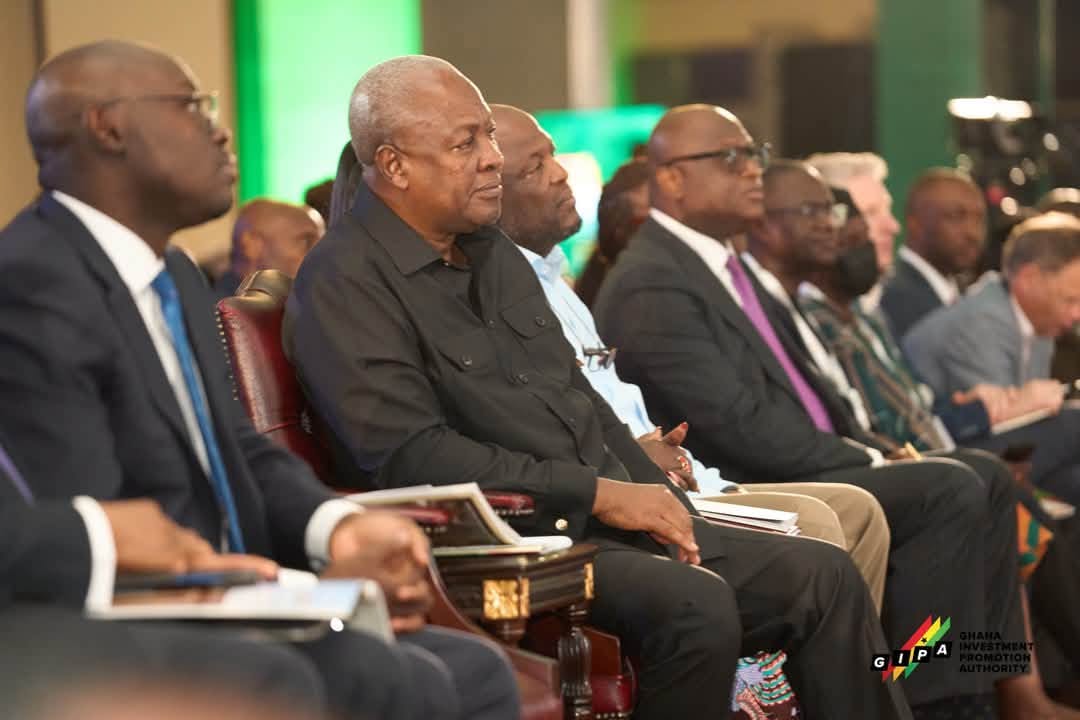
The Invest Ghana Summit 2026 brings together government officials, investors, financial institutions and business leaders to examine Ghana’s investment opportunities and the role of private capital in supporting economic transformation.
Organised by the Ghana Investment Promotion Authority in collaboration with the Ghana Export Promotion Authority and Ghana Free Zones Authority, the two-day gathering focuses on attracting investment into productive sectors, strengthening partnerships and expanding Ghana’s participation in regional and global markets.
Dr Forson urged investors to position themselves to benefit from the country’s economic transformation agenda. “Invest in Ghana, produce here and grow with us as Ghana moves to the next stage,” he concluded.

Ghana ready to produce more, export more as US$10 billion New Economy Programme takes shape — Ato Forson
ADVERTISEMENT
ADVERTISEMENT
ADVERTISEMENT
Related Posts


ADVERTISEMENT