Ghana will strengthen measures against dumped goods, smuggling and under-invoiced imports as part of efforts to protect domestic manufacturers and create a more competitive environment for locally produced goods.
Minister for Trade, Agribusiness and Industry, Elizabeth Ofosu-Adjare, says the government is determined to ensure that Ghanaian factories are not disadvantaged by unfair trade practices that undermine local production and discourage industrial investment.
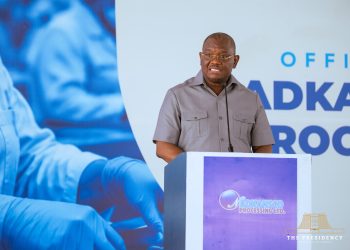
Addressing investors at the Invest Ghana Summit 2026, the Minister maintained that attracting investment into manufacturing must be accompanied by effective protection against unfair competition.
“If I build a factory in Ghana, will I be undercut by dumped or undeclared imports?” she asked.
She explained that the government would deploy trade remedies permitted under World Trade Organisation rules through the Ghana International Trade Commission, while working with Customs authorities to address smuggling and under-invoicing.
“Ghana remains an open economy. Open does not mean unprotected against unfair trade,” she declared.
Mrs Ofosu-Adjare also announced measures to increase demand for locally manufactured products through government procurement.
She said public institutions would increasingly purchase Ghanaian-made uniforms, office furniture, school feeding supplies and construction materials in line with President John Dramani Mahama’s directive to support domestic industry.
According to her, the government’s purchasing power could provide an important market for local manufacturers, helping businesses expand production and create employment.
The Minister further identified difficulties in accessing international markets as a major obstacle confronting Ghanaian exporters.
She explained that some Ghanaian products qualify for preferential or duty-free access to foreign markets but lose those benefits because exporters cannot satisfy documentation, certification and rules-of-origin requirements.
To address the problem, she said her ministry would collaborate with the Ghana Export Promotion Authority and the Customs Division of the Ghana Revenue Authority to help businesses take advantage of trade arrangements under the African Continental Free Trade Area, the European Union, the United Kingdom and other preferential schemes.
The initiative forms part of the Accelerated Export Development Programme, which seeks to increase the number of exporting firms, the volume of products exported and the markets reached by Ghanaian businesses.
Mrs Ofosu-Adjare also criticised non-tariff barriers within West Africa, including unofficial roadblocks, unpublished charges, repeated inspections and unnecessary documentation.
She disclosed that Ghana was pushing for the removal of such obstacles and would raise specific complaints submitted by exporters.
On product quality, the Minister announced efforts to strengthen Ghana’s testing and certification systems so that products approved locally could gain wider acceptance in regional markets without undergoing repeated testing.
She said the objective was to secure recognition for certificates issued in Ghana across markets such as Nigeria, Côte d’Ivoire and Rwanda, reducing compliance costs for exporters.
The policy direction comes against the background of Ghana’s expanding non-traditional export sector.
Citing export figures for 2025, Mrs Ofosu-Adjare disclosed that non-traditional export earnings reached approximately US$5 billion, representing growth of 30.7% over the previous year.
She said processed and semi-processed products contributed US$3.09 billion, an increase of 52.78 per cent, with cocoa paste, cocoa butter and cocoa powder among the leading export earners.
According to the Minister, Ghana’s non-traditional exports now reach 152 countries across 609 product lines, demonstrating the country’s growing capacity to participate in regional and international value chains.
She argued that the challenge was to convert that export performance into greater opportunities for manufacturers through improved standards, stronger market access and a business environment that rewards domestic production.
Mrs Ofosu-Adjare assured investors that her ministry would provide direct assistance when operational difficulties arise, citing a ministerial clinic established to bring relevant state agencies together to resolve business concerns.
She said some cases had been resolved within a day, stressing that delays affecting industrial operations required urgent attention.