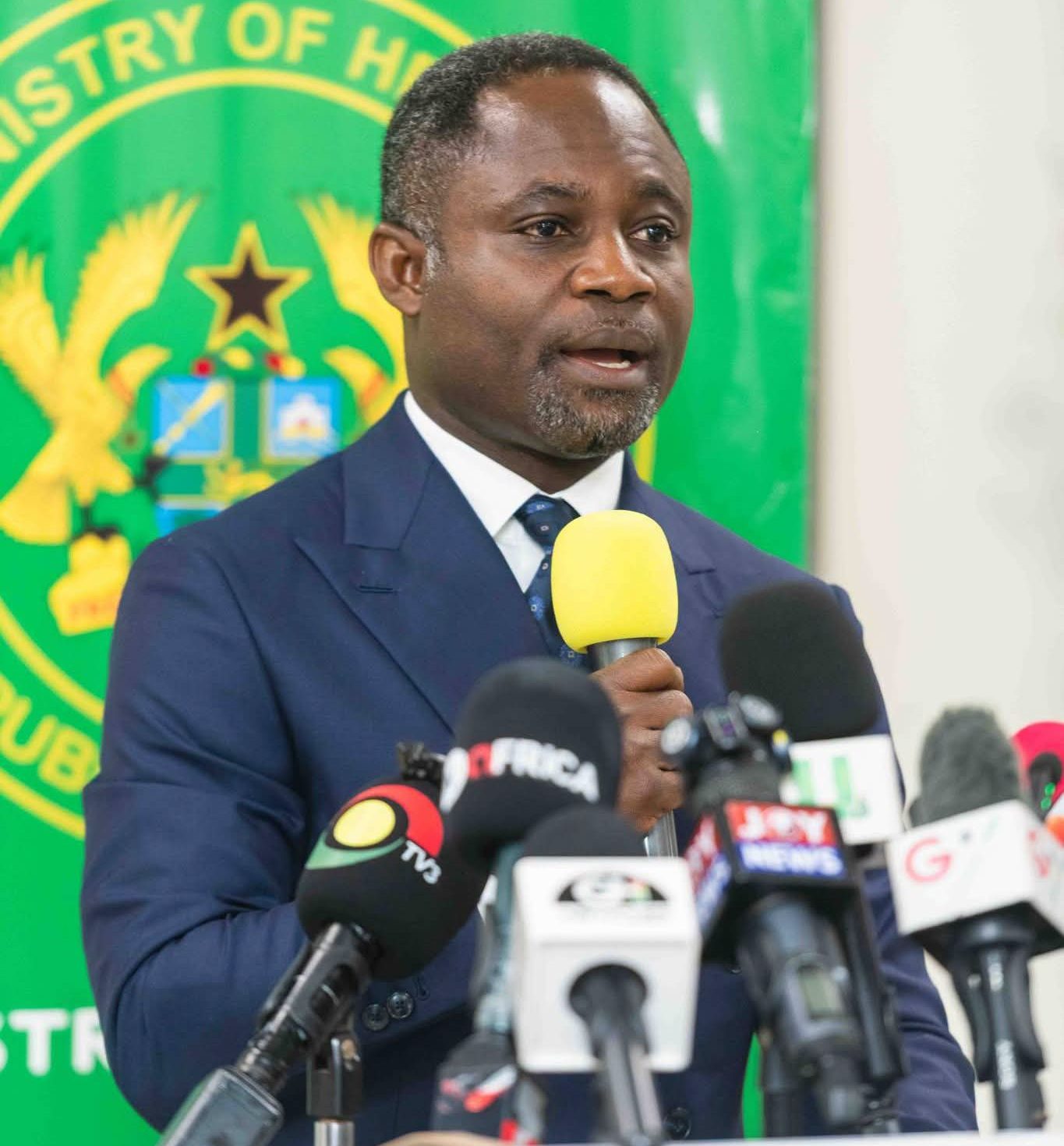
The Minister for Health, Kwabena Mintah Akandoh, has announced the official rollout of the government’s landmark Free Primary Healthcare initiative across 135 selected districts in all 16 regions of Ghana. The policy marks a strategic national transition from curative hospital-based care toward community-centered, preventive health services.
Addressing stakeholders and members of the press, the Minister expressed gratitude to traditional leaders, clergy, District Chief Executives, Members of Parliament, health sector directors, and development partners, including the Christian Health Association of Ghana and the National Health Insurance Authority for their role in reaching this implementation phase. He particularly commended the media for raising public awareness and facilitating nationwide community engagements.
The Ministry of Health originally targeted 150 deprived districts for the first phase of the rollout. With services currently live in 135 districts, the Minister assured the public that the remaining 15 target districts would be onboarded by the end of the week. Full nationwide coverage across all 216 districts is projected for completion by 2027.
The initiative is operating across 4,574 healthcare facilities nationwide, comprising 3,780 CHPS compounds, 746 health centers, and 48 polyclinics. To support service delivery, the Ministry has dispatched essential diagnostic tools and equipment across these centers. Delivery of approximately 5,000 basic clinical care kits is underway, with a second batch of over 12,000 equipment units expected. Additionally, at least 7,000 transport vehicles and logistics units are being distributed to enhance health worker mobility within rural communities.
To improve accessibility in high-traffic urban areas, the Ministry has strategically established 30 Outreach Health Posts near major markets and public transport hubs, with plans to expand this network by 217 additional posts.
Akandoh emphasized that while the service is completely free at the point of care for citizens, it is fully funded by the government through a dual-payment system designed to safeguard financial sustainability for providers. The population-based payment system receives a quarterly allocation of approximately 35 million Ghana Cedis dedicated to community-level disease prevention and health promotion, while the Diagnostic-Related Groupings claim-based system covers curative primary services.
The operational scope of the Free Primary Healthcare policy spans three distinct delivery tiers. Promotive services cover lifestyle counseling, nutritional guidance, physical activity promotion, and community sanitation education. Preventive services involve routine screening for hypertension, diabetes, maternal and child health tracking, mental health assessments, and early screenings for selected cancers. Curative services manage first-line treatment for common outpatient ailments, including malaria, respiratory tract infections, and diarrheal diseases.
To access services, citizens can generate a 24-hour verification code by dialing *929#. The code serves as an internal audit and accountability mechanism to confirm service delivery before claims are settled. The Minister clarified that no national health insurance card or financial pre-condition is required to receive care under this scheme.
Addressing potential misconceptions, the Minister explained that Free Primary Healthcare does not replace the National Health Insurance Scheme or cover tertiary hospital admissions. Instead, the initiative acts as an entry-level foundation to the existing scheme. By diagnosing and managing health conditions early at the CHPS and polyclinic levels, the policy aims to significantly reduce the operational and financial pressure on tertiary referral hospitals and the national health insurance framework.
Complementing both primary healthcare and the national health insurance structure, the government is also leveraging the Mahama Cares initiative to provide coverage for severe non-communicable diseases, such as advanced cancers, which fall outside standard primary care parameters.
The Minister issued a strict warning against illegal charges at participating primary facilities, stressing that all services within the package are fully subsidized.
The Ministry of Health will shortly activate a dedicated hotline for citizens to report any health worker or facility demanding informal payments. Akandoh confirmed that reported incidents will be investigated promptly, with swift disciplinary action, including immediate suspensions, taken against offending personnel.
Citizens residing within the implementing districts are encouraged to utilize nearby health posts and CHPS compounds for early screenings, routine health evaluations, and preventative care.
Eugenia Ewoenam Osei