President John Dramani Mahama has called for stronger, responsive and coordinated health regulation across Africa to protect patients, strengthen public confidence and support the continent’s journey towards universal health coverage.
According to the President, expanding access to healthcare would have limited meaning if patients could not trust the quality, competence and ethical standards of the professionals providing care.
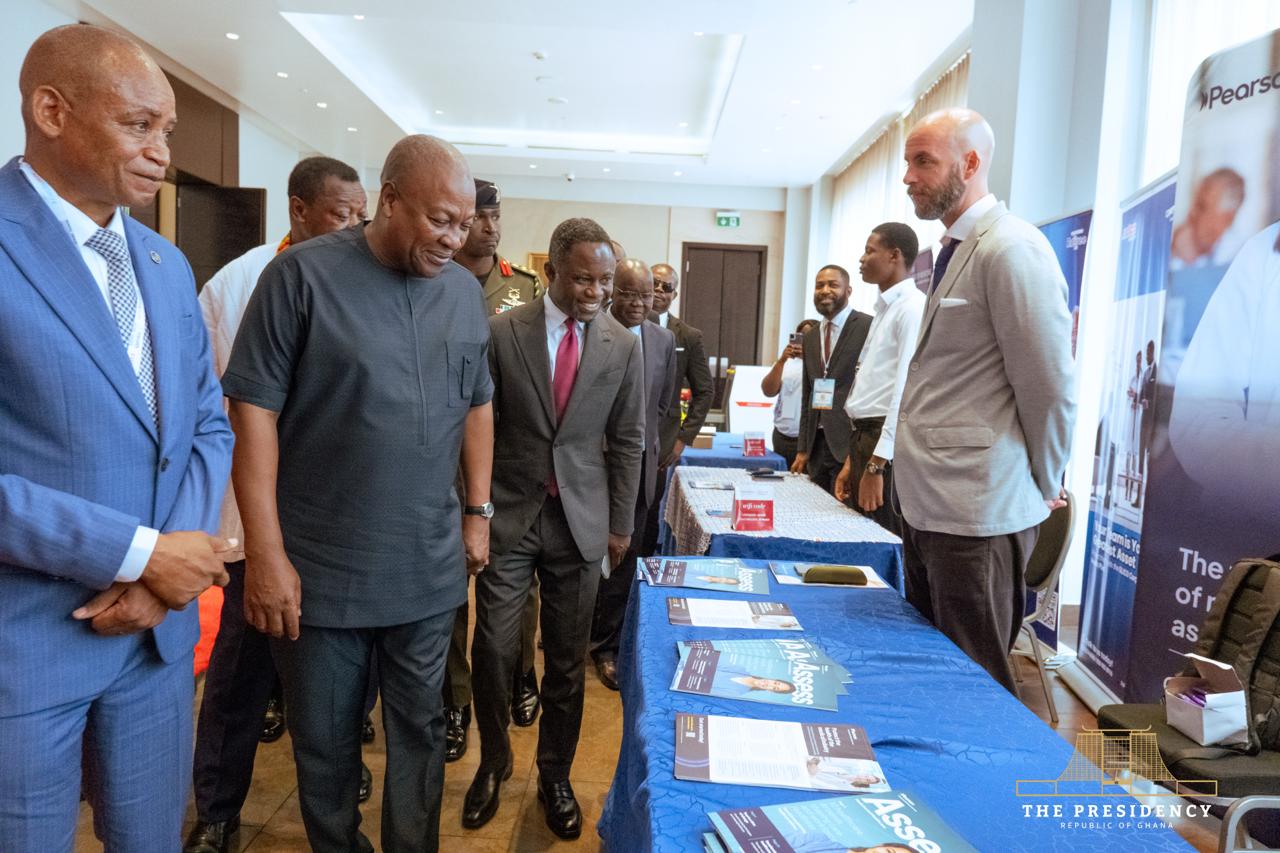
Speaking at the 28th Annual International Conference of the Association of Medical Councils of Africa (AMCOA) in Accra, on the theme, “Responsive Regulation for Safer Communities Towards Universal Health Coverage,” President Mahama said regulation must be viewed as a critical pillar of public health rather than a bureaucratic requirement.
“Regulation is therefore not a bureaucratic obstacle. It is public protection, patient safety and the foundation of confidence in healthcare,” he said.
He added that “public trust is the currency of every good health system, and regulators are among its principal custodians.”
Regulation as a Public Trust
President Mahama explained that every professional licence issued by a regulatory body represents a commitment to the public that the individual entrusted with a patient’s life has been properly trained, fairly assessed, duly registered and subjected to appropriate professional and ethical standards.
He stressed that Africa’s changing health landscape required regulatory institutions to evolve alongside emerging challenges, including population growth, shifting disease patterns, increasing non-communicable diseases and the growing mobility of health professionals.
“Regulation therefore cannot remain static. It must be responsive, firm, fair, protective and enabling, grounded in our African reality but informed by global knowledge,” he stated.
The President said responsive regulation was not about creating more rules, but ensuring that regulators knew when to guide, support, correct or sanction.
Digital Health and Artificial Intelligence
President Mahama identified digital transformation and artificial intelligence as major opportunities for improving healthcare delivery, but cautioned that they also presented new regulatory and patient-safety risks.
He said telemedicine, electronic medical records, digital prescriptions, remote monitoring and mobile health applications could expand access and connect underserved communities to specialist care.
However, he recounted Ghana’s experience with a digital medical records provider that repeatedly demanded additional payments before eventually switching off the system.
“This experience demonstrates the dangers associated with digitalisation and raises important questions about data ownership, system dependence and continuity of healthcare services,” he said.
President Mahama also called for clear rules governing cross-border telemedicine and accountability where artificial intelligence contributes to medical decisions.
“Artificial intelligence must support, and not replace, professional judgement and human responsibility,” he stressed.
He further warned that AI systems must be trained using representative data, noting that technologies developed from datasets that inadequately represented African patients could result in inaccurate diagnoses and serious patient-safety risks.
Tackling Fake Practitioners and Qualifications
The President also urged African regulatory authorities to intensify their fight against forged qualifications, fake licences, professional impersonation, fraudulent certificates and misleading health claims.
“When a fraudulent practitioner enters a consulting room, every patient becomes vulnerable,” he warned.
He said the cross-border nature of professional mobility meant that no single country could effectively tackle such challenges alone.
“Fraud recognises no borders, and our response must therefore be continental,” President Mahama said.
He called for secure and lawful information-sharing mechanisms among African regulatory authorities to enable regulators to quickly verify qualifications and identify professionals who had been sanctioned elsewhere.
“No country should become a refuge for a practitioner sanctioned elsewhere,” he added.
Health Workforce Migration
President Mahama also highlighted the increasing migration of doctors, dentists and other health professionals across African borders in search of training, employment, safety and opportunities.
He said African countries must cooperate to train more professionals, retain critical skills, verify credentials, recognise qualifications and promote ethical recruitment.
“A border may separate two nations, but it should never separate Africans from safe healthcare,” he said.
He further called for health professionals serving outside their countries of birth to be treated with dignity and fairness, stressing that Africa’s health future depended on solidarity, shared standards and mutual respect.
Ghana’s Universal Health Coverage Agenda
President Mahama said Ghana remained committed to achieving universal health coverage through measures designed to expand access while protecting citizens from financial hardship.
He disclosed that the National Health Insurance Scheme currently covers about 76 per cent of the population, with government targeting 90 per cent coverage.
“Even 90 per cent would leave 10 per cent of our population uncovered. That is why we have introduced additional schemes to complement the National Health Insurance Scheme,” he explained.
He highlighted the Free Primary Healthcare Programme, which he said had commenced in about 160 districts, with the remaining districts expected to be onboarded.
According to the President, the programme places particular emphasis on preventive healthcare and underserved rural communities, with beneficiaries able to access services at CHPS compounds, mobile health kiosks and other designated facilities at no cost.
“We believe this will take Ghana another step towards universal health coverage,” he said.
President Mahama also cited the Ghana Medical Trust Fund as another initiative aimed at protecting people living with chronic and high-cost conditions from financial hardship.
Health Sovereignty
The President called for greater African health sovereignty, stressing that the concept should not be interpreted as isolation from the international community.
“Health sovereignty does not mean isolation; it means having the capacity to meet our people’s needs confidently and competently through mutually respectful partnerships,” he said.
He disclosed that about 70 per cent of medicines consumed in Ghana are currently imported and said government had developed a five-year plan aimed at reversing the situation.
The goal, he said, was to produce at least 70 per cent of the medicines consumed locally.
President Mahama also urged African countries to invest in health professionals, sustainable financing, local pharmaceutical production, vaccines, health technologies and reliable health-data systems.
Seven Priorities for Regulators
President Mahama proposed seven areas of action for the conference and African regulatory authorities.
These include strengthening regulatory harmonisation and cooperation; investing in regulatory science; developing secure data-exchange systems; protecting the integrity of health professional education; creating practical regulatory frameworks for humanitarian and fragile settings; regulating digital health and artificial intelligence; and placing patients and the public at the centre of regulatory decisions.
“The true measure of a regulator is not how many licences it issues, but how effectively it protects people and patients,” he said.
He also urged regulators to strengthen accreditation, professional assessments, internships, continuing professional development and ethical training.
Patient Safety Has No Borders
President Mahama said universal health coverage could not be achieved without building confidence in healthcare systems.
“Universal health coverage cannot exist without universal health confidence,” he stated.
He called on the conference to move beyond discussions and produce practical outcomes, stronger collaborations, implementable policy recommendations, capacity-building plans and improved information-sharing mechanisms.
“Let us affirm that patient safety has no borders and that every African deserves safe, ethical and quality healthcare wherever that care is received,” he said.
The President commended AMCOA, the Ghana Medical and Dental Council and the Ministry of Health for creating a platform for regulatory cooperation and continental dialogue.
He also urged policymakers to provide regulatory institutions with the legal authority, independence, resources and technological capacity needed to perform their duties effectively.
“To our international partners, I say support Africa not only to deliver health services, but also to govern those services well and strengthen the institutions that sustain them,” he added.
President Mahama reaffirmed Ghana’s commitment to African cooperation, saying the continent’s shared challenges required collective solutions.
“Our common challenges require common solutions. Whether in health security, workforce development, digital transformation, professional mobility, emergency response or regulatory reform, no African country can succeed alone,” he said.
He subsequently declared the 28th Annual International Conference of AMCOA officially open, urging participants to be bold, practical and forward-looking in their deliberations.
“Let your discussions be honest, your recommendations implementable and your partnerships enduring,” President Mahama said.
Story: Patrick Asford Boadu