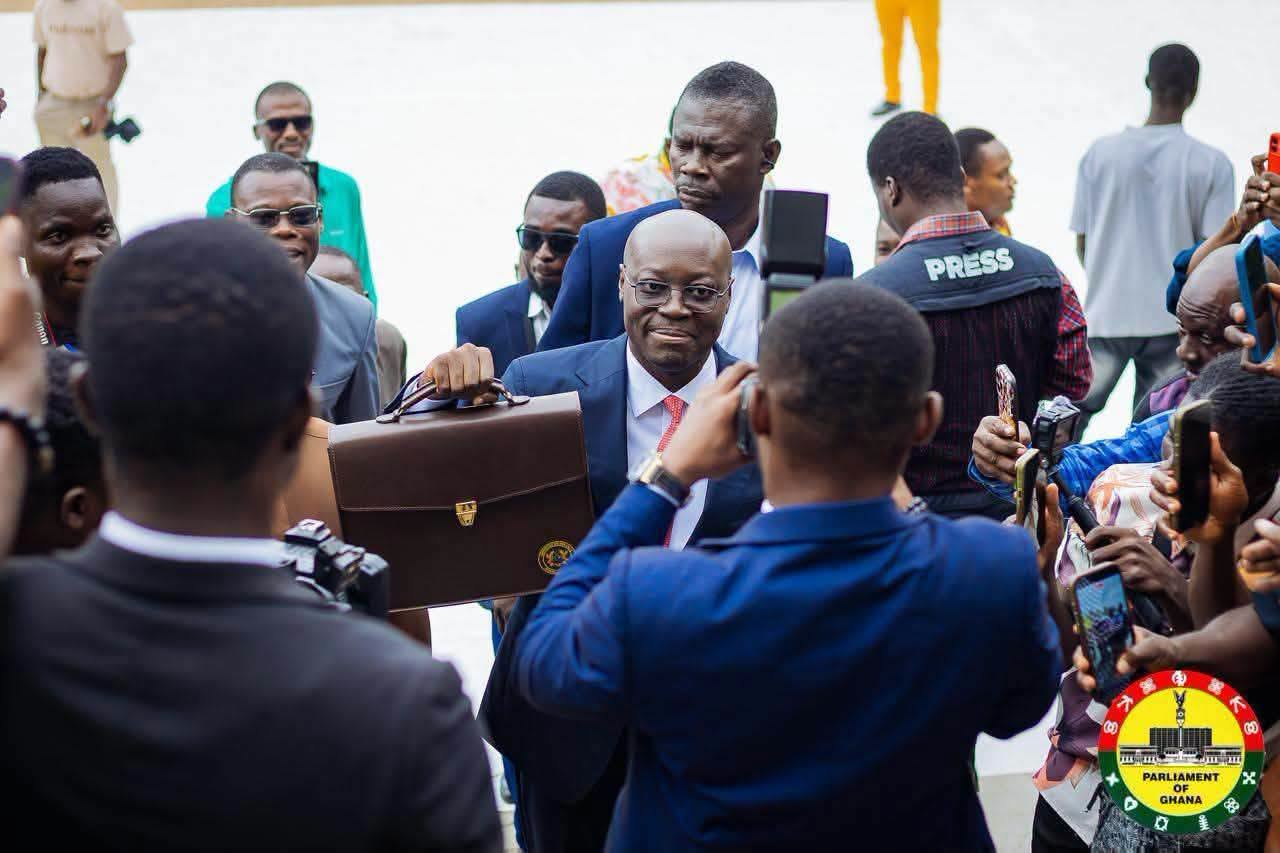
A member of Parliament’s Finance Committee, Hon. Atta Issah, has hailed the Finance Minister’s decision to present the 2026 Mid-Year Budget Review without seeking a supplementary budget, describing the move as a demonstration of prudent fiscal management and disciplined public spending.
Speaking on Gold Morning Conversation with Henry Agbai on Friday, the Sagnarigu MP said the government’s ability to reallocate existing resources to meet emerging priorities without requesting additional funding reflects responsible economic management.
He argued that successive NDC administrations have maintained a tradition of operating within approved budgets, even during periods of economic pressure.
“From 2013 to 2024, NDC governments stuck to their budgets. The NPP, on the other hand, requested supplementary budgets in 2019 and 2020, and introduced new taxes such as the luxury vehicle tax and Covid levy. That has been their approach,” he said.
Hon. Atta Issah also pointed to what he described as improving macroeconomic indicators, noting that the International Monetary Fund has assessed Ghana’s economy positively, citing growth outside the oil sector, inflation easing to about five per cent, a narrowing fiscal deficit and stronger financial market performance.
While stressing that Ghana should continue engaging the IMF as a member country, he said future engagements should increasingly centre on technical assistance rather than emergency financial support.
“We must go to the IMF when we are strong, not when we are weak and investors have lost trust in us,” he stated.
The Finance Committee member further urged all governments to adhere strictly to the Public Financial Management Act by living within approved budgets and exercising fiscal discipline.
Highlighting key aspects of the Mid-Year Budget Review, he cited the Finance Minister’s candid acknowledgement of existing economic challenges, the commitment to establish the Women’s Development Bank before the end of the year, and the decision to redirect funds from lower-priority areas to critical interventions without seeking additional appropriations.
Responding to the Minority’s description of the budget review as “empty,” Hon. Atta Issah dismissed the criticism, arguing that it reflected differing approaches to fiscal management.
“They are used to supplementary budgets and new taxes, so it’s not surprising they would say that,” he pointed out.
Story by Ruth Quaye