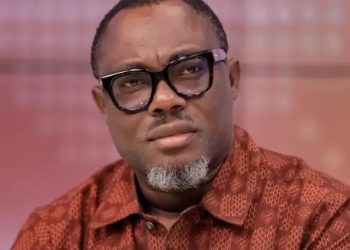
The Executive Director of Parliamentary Network Africa (PNA), Sammy Obeng, has called for a full investigation into the controversial GH¢70,000 parliamentary facilitation memo, arguing that a denial from the office of the Deputy Minority Leader is not enough to bring the matter to a close.
“A mere denial from the Deputy Minority Leader’s office is insufficient to bury the leaked GH¢70,000 parliamentary facilitation memo,” Obeng said, calling on the cybersecurity unit of the Ghana Police Service to help establish the origin and authenticity of the document.
Speaking on the controversy surrounding the scanned memo, Obeng said the public backlash and responses from relevant institutions make a thorough investigation necessary.
“The statement from Parliament, the statement from the OSP, the public outcry that has greeted the matter should definitely let us know that that should not end the matter,” he stated.
He argued that Ghana’s security agencies have the technological capacity to trace the source of the document and determine how it originated.
“Fortunately for us, we live in a country where I do not doubt the ability of institutions such as the cybersecurity unit of the Ghana Police to verify these kinds of things. We would certainly be able to know where this originated from,” he said.
Obeng placed the controversy within the broader debate over financial inducements and unofficial payments involving the Executive and Legislature. He recalled previous public comments by former Appointments Committee Chairman Joseph Osei-Owusu concerning payments made to committee members following vetting exercises.
“We live in a country where a former chair of the Appointments Committee has said to us, in the person of Honourable Joe Osei-Owusu, on public television that when he was chairman of the committee, at the end of every vetting process, the Office of the Chief of Staff would bring them money as members of the committee in appreciation for the work that they have done,” he recalled.
Obeng warned that allowing unregulated financial facilitation involving lawmakers could undermine Parliament’s independence and oversight responsibilities while creating opportunities for improper influence.
“How safe are we that people with bad intentions will not just gather money, assemble members of Parliament, whether individually or collectively, influence them with money without us knowing, only to be able to pass bad laws, only to be able to pass bad people to take up state institutions as ministers, as justices, etc.? If we don’t check these things, we’ll end up with an unruly country,” he warned.
He therefore called for an end to informal cash payments to lawmakers, arguing that any legitimate financial support should pass through transparent and traceable channels, including established parliamentary allowances.
“I would rather these monies go into a traceable pool so we are supporting the Parliament of Ghana through a pool that can be known,” Obeng proposed.
He further urged Parliament to take an active interest in investigating such allegations to their logical conclusion, stressing that doing so would help protect the integrity of the institution and strengthen public confidence in Parliament.
Story by: Errah Salifu Razak