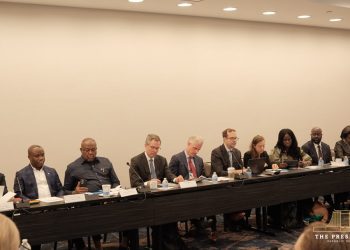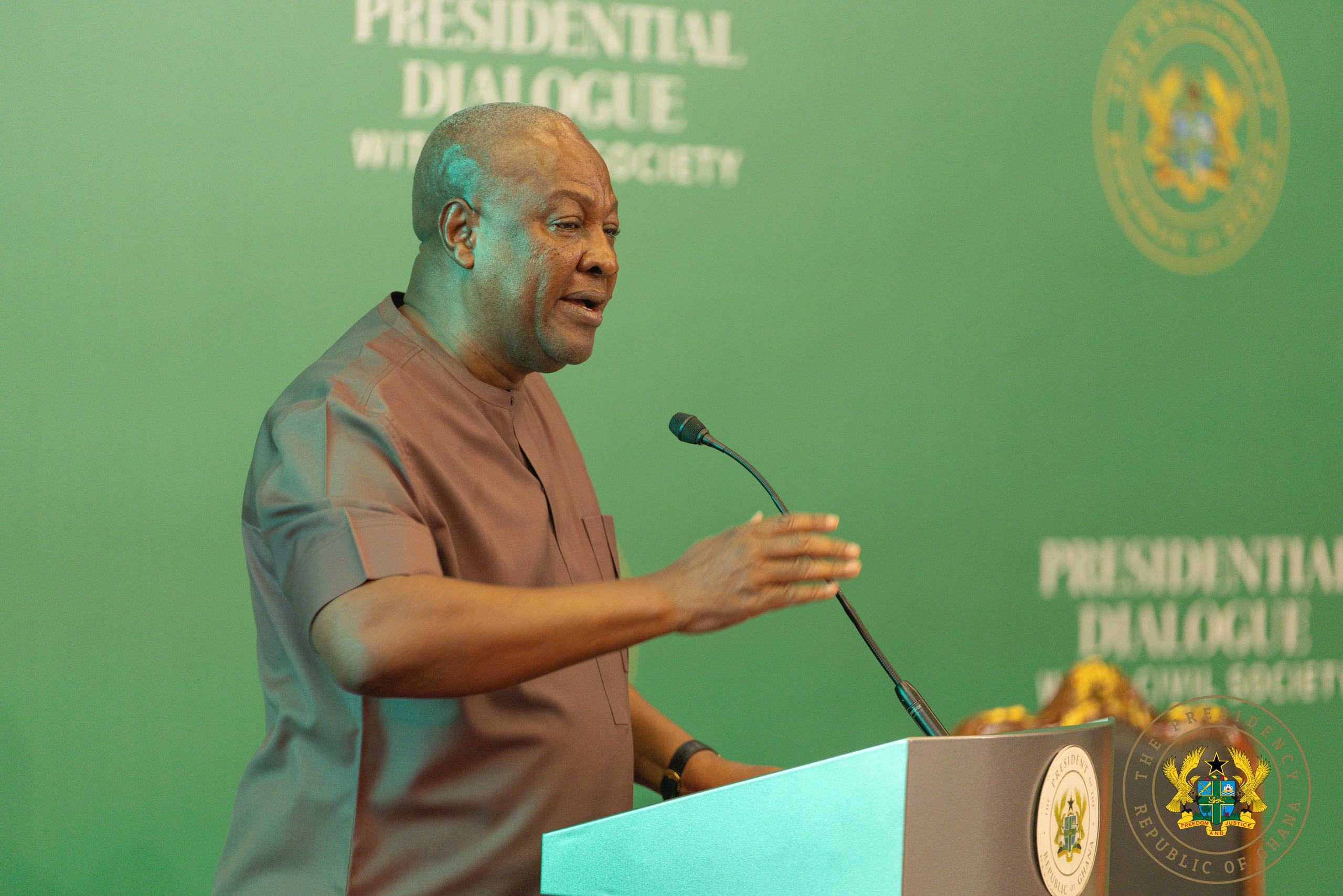
President John Dramani Mahama has addressed a wide range of national concerns, including witchcraft accusations, unemployment, environmental protection, and economic pressures, during his engagement with civil society at the Presidency.
Witchcraft Accusations and Reintegration Efforts
The President described the issue of so-called witch camps as complex and deeply rooted in misinformation and cultural practices.
Drawing from experiences at the Gambaga Witches Camp, he noted that many accused women face the stark choice between violence in their communities and relocation to camps.
“In many cases, these women either face death in their communities or seek refuge in the camps,” he explained.
He highlighted past efforts to reintegrate victims through community engagement, reconciliation processes, and education to dispel misconceptions particularly around health conditions such as infertility, which are often wrongly attributed to elderly women.
The President also stressed the need to reintroduce and pass the anti-witchcraft bill, noting that a previous version expired after not receiving assent.
He referenced the killing of an elderly woman in Kafaba as a tragic example, adding that perpetrators have since been prosecuted, underscoring the need for stronger legal protections.
Teacher and Health Worker Recruitment Reforms
On employment, President Mahama confirmed that recruitment of teachers and health workers has been approved, with application portals expected to open soon.
He acknowledged a backlog of trained professionals and attributed it to inconsistencies in previous recruitment cycles.
To address this, the government is introducing district-based recruitment, where applicants will apply directly to specific districts and commit to serving there.
“The issue is not just numbers, but distribution. Some areas have excess staff, while others have none,” he noted.
He added that continuous recruitment will replace the previous stop-start approach to ensure more consistent employment opportunities.
24-Hour Economy Policy Takes Shape
The President revealed that the 24-hour economy authority bill has been passed, paving the way for full implementation.
He noted that some measures are already underway, including extended working hours at ports and passport offices, with the new authority expected to coordinate nationwide rollout.
Fuel Prices and Cost of Living Pressures
Addressing economic concerns, President Mahama attributed recent increases in fuel prices to global geopolitical tensions affecting crude oil markets.
He, however, noted that currency stability has helped cushion the impact locally.
Government, he said, is considering measures such as adjusting pricing margins and levies to mitigate the effects on consumers, especially given the link between fuel costs, transport fares, and food prices.
Firm Stance on Achimota Forest Protection
On environmental issues, the President reaffirmed his commitment to protecting the Achimota Forest, describing it as one of the last major green spaces in Accra.
He directed that no further encroachment or land concessions should be allowed, while indicating that concerns surrounding Executive Instrument 114 will be reviewed.
Crackdown on Illegal Mining Intensifies
President Mahama disclosed that government has taken steps to stop district assemblies from generating revenue by taxing equipment used in small-scale and illegal mining activities.
Investigations, he said, revealed that the practice was widespread, prompting plans for new guidelines and training for local authorities.
He added that increased funding has been allocated to combat illegal mining, with improved logistics, including patrol boats to monitor river bodies.
Security agencies are also actively destroying illegal mining equipment and intercepting imported parts used to assemble machinery.
Water Quality Monitoring to Be Published
As part of efforts to improve transparency, the President announced plans to regularly publish data on water quality, including turbidity levels and contamination by heavy metals.
This, he said, will help track environmental conditions and keep the public informed.
Consumer Protection and Legislative Engagement
The President also indicated that government is engaging stakeholders on the consumer rights protection bill and is open to collaboration to ensure its passage.
He encouraged civil society to remain actively involved in legislative processes, monitoring public projects, and strengthening accountability mechanisms.
A Call for Collective Responsibility
President Mahama reiterated that addressing Ghana’s challenges requires a collective national effort, emphasizing collaboration between government, civil society, and citizens.
“The responsibility of transforming our country does not lie with government alone—it requires all of us,” he concluded.
Story: Patrick Asford Boadu