The Bank of Ghana’s Monetary Policy Committee (MPC) has unanimously maintained the Monetary Policy Rate at 14.0%, citing heightened geopolitical tensions, rising crude oil prices and emerging inflationary pressures, despite continued improvements in Ghana’s domestic economic fundamentals.
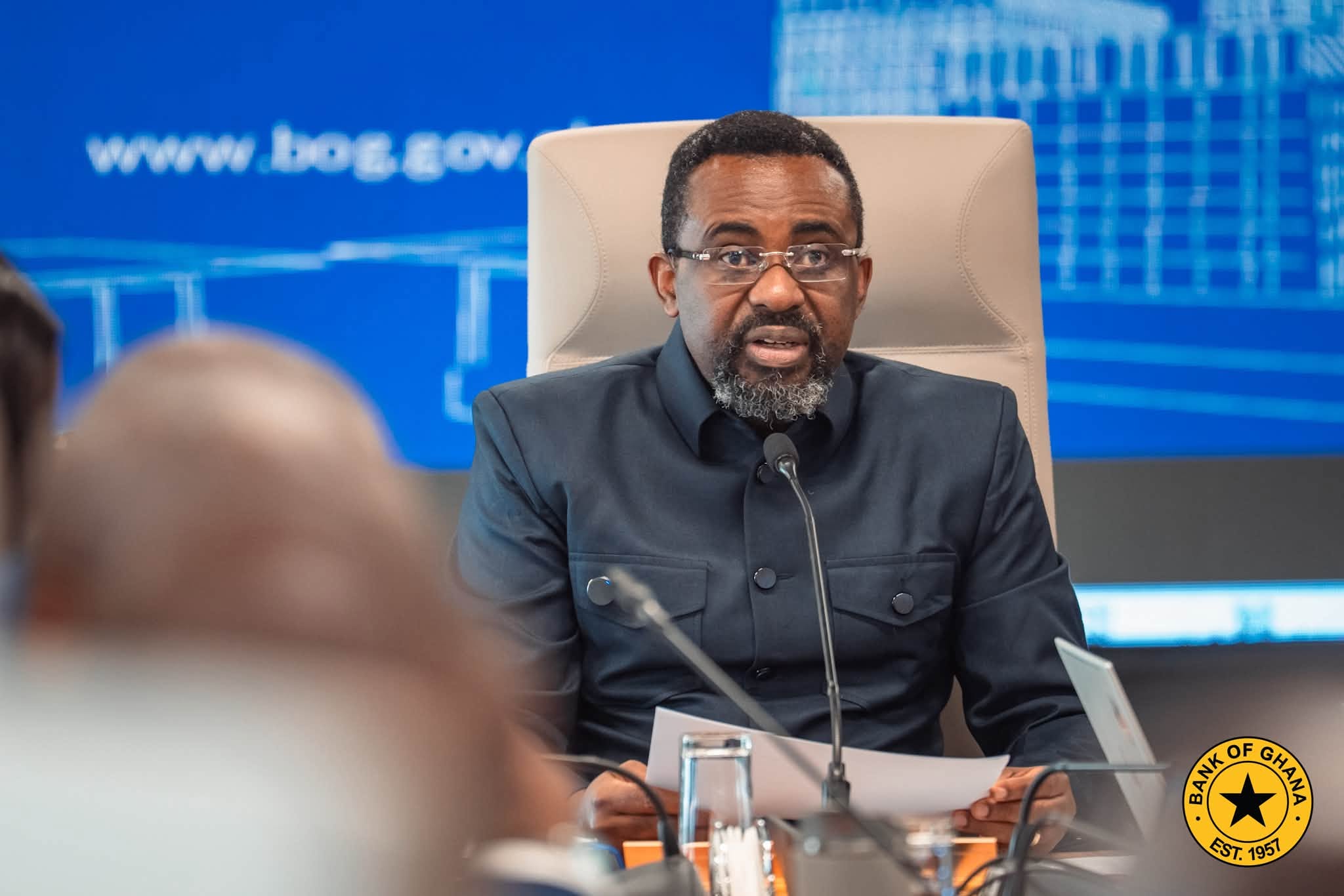
Announcing the decision at the conclusion of the Committee’s 131st regular meeting in Accra on Wednesday, Governor of the Bank of Ghana and Chairman of the MPC, Dr. Johnson Pandit Asiama, said the current policy stance remains appropriate to steer inflation towards the medium-term target while allowing the Committee to monitor evolving global developments.
“The Committee judged that the current policy stance remains appropriate to guide inflation into the medium-term target band, while allowing time to assess the evolving geopolitical developments and their potential impact on the domestic economy,” he said.
The Governor explained that although Ghana’s inflation outlook remains broadly favourable, recent developments in the Middle East have reignited volatility in global energy markets, disrupted trade routes and heightened uncertainty across the global economy.
According to him, renewed geopolitical tensions have contributed to higher crude oil prices, stalled disinflation in several economies and prompted many central banks to suspend monetary policy easing in response to emerging inflationary risks.
Domestically, headline inflation increased from 3.7% in May to 5.3% in June 2026, driven largely by temporary base effects and higher transport fares following the surge in international crude oil prices. However, the Governor stressed that inflation remains below the lower bound of the Bank’s medium-term target band and inflation expectations continue to be well anchored.
The MPC noted that its latest forecasts remain largely unchanged from the previous policy round, with inflation expected to gradually return to the target band over the forecast horizon.
However, the Committee warned that possible increases in utility tariffs, sustained geopolitical tensions and further increases in global oil prices remain significant upside risks to the inflation outlook. On the other hand, continued fiscal consolidation and an appropriately calibrated monetary policy are expected to help contain these risks.
Despite the uncertain external environment, the Governor said Ghana’s economy continues to demonstrate resilience, supported by stronger growth, improving confidence, easing lending conditions and favourable external sector performance.
The Committee’s next meeting is scheduled for September 22 to 24, 2026, with the next policy decision to be announced at the conclusion of those deliberations.