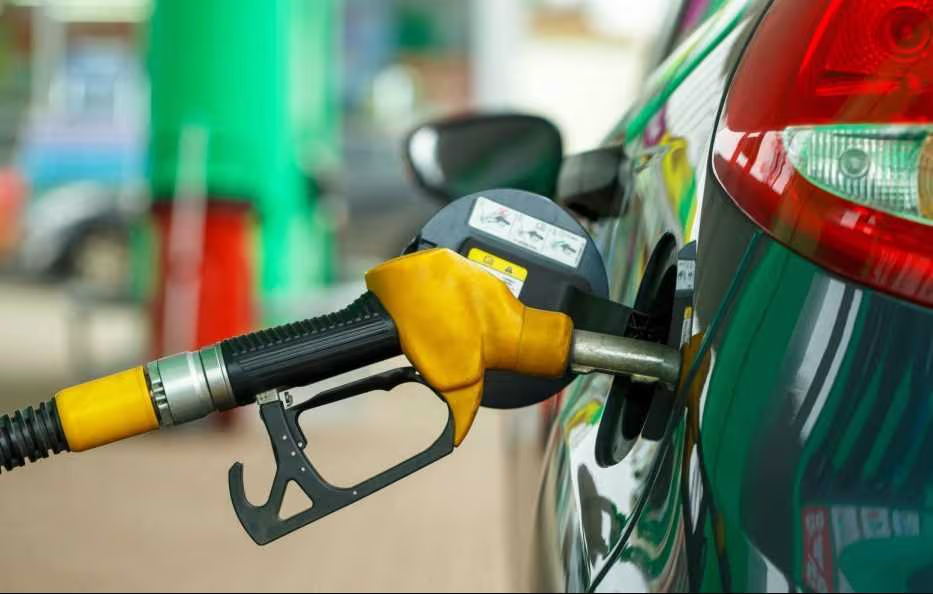
Petrol prices at the pumps are expected to record a marginal decline in the first pricing window of February, according to projections by the Chamber of Petroleum Consumers Ghana (COPEC).
The outlook comes amid mixed movements in international petroleum product prices and recent trends within Ghana’s downstream petroleum market. While global indicators have shown some volatility, COPEC believes local market conditions will support a slight downward adjustment in petrol prices, with diesel expected to remain largely unchanged.
Speaking to Citi News, COPEC’s Executive Secretary, Duncan Amoah, said current data from Bulk Distribution Companies (BDCs) suggests that petrol prices have been relatively stable, even as diesel prices have seen notable increases on the international market.
“Prices are likely to remain stable for this window, although petrol has stayed stable, diesel has gone up quite significantly, about five per cent,” Mr Amoah explained. “Unfortunately, the local market will not respond with the increase because the numbers I have picked from some of the BDCs indicate that they have gone down rather week on week.”
He noted that this trend is likely to result in a nominal reduction in petrol prices at the pumps, while diesel prices are expected to be maintained at current levels across the country.
“So, you are likely to see some nominal adjustment in price of petrol, while diesel is likely to be maintained at the current levels that you find it,” he added.
COPEC’s projection aligns with the broader pattern of cautious pricing adjustments by Oil Marketing Companies (OMCs), who have in recent months sought to balance global price movements with domestic demand conditions and exchange rate considerations.
However, Mr Amoah cautioned that the outlook could change rapidly if geopolitical risks intensify. He urged authorities and industry players to closely monitor global developments that could disrupt crude oil supply and drive up import costs.
“If it happens, you potentially are looking at crude jumping over 80 to the 100th region in no time,” he warned, pointing to tensions involving major oil-producing regions. He cited the situation in Venezuela as an example of a potential trigger for price spikes, noting that a global oversupply has so far helped prevent a bullish surge in prices.
COPEC said while the current projections offer some relief to consumers, sustained price stability will depend on global market conditions, geopolitical developments, and prudent management of Ghana’s downstream petroleum sector in the coming weeks.