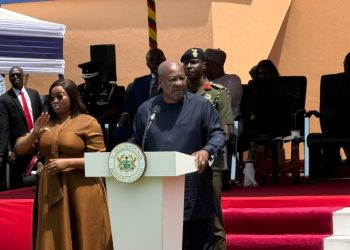
The Chief Director of the Ministry of Foreign Affairs and Regional Integration, Ambassador Khadidja Iddrisu, has called for a strategic shift in Ghana-Zimbabwe relations, moving from historical sentiment toward “tangible, forward-looking partnerships.”
Speaking Friday at the opening of the technical meetings for the inaugural session of the Ghana-Zimbabwe Permanent Joint Commission for Cooperation (PJCC) in Accra, Amb. Iddrisu emphasized that while the two nations share deep-rooted “in-law” ties and a common liberation history, economic engagement has lagged behind their political goodwill.
Addressing a delegation led by Zimbabwe’s Permanent Secretary for Foreign Affairs and International Trade, Ambassador Albert Ranganai Chimbindi, Amb. Iddrisu noted that the bond between the two nations is personal. She highlighted the “unique and enduring” connection cemented by the marriage of Zimbabwe’s former President Robert Mugabe to Ghana’s Sally Francesca Hayfron.
”Ghana and Zimbabwe are not just partners in the formal sense; we are, in many respects, family,” Amb. Iddrisu stated. “It is, therefore, with particular warmth that we receive you today, not merely as distinguished guests, but as relatives.”
She further recalled how Ghana, under Osagyefo Dr. Kwame Nkrumah, stood at the forefront of Africa’s liberation, offering diplomatic support to Zimbabwe during its quest for self-determination.
Closing the Economic Gap
Despite these strong foundations, the Chief Director acknowledged with “candour” that bilateral trade and structured collaboration have remained below potential. The convening of the PJCC is viewed as a necessary step to correct this imbalance.
The commission has already identified over 20 priority areas for cooperation. These sectors include trade and investment, agriculture, mining, energy, education, health, and tourism. Amb. Iddrisu stressed that the African Continental Free Trade Area (AfCFTA) provides the ideal strategic framework for both nations to expand market access and contribute to broader continental integration.
The Chief Director was clear that the PJCC must function as an “engine for implementation” rather than a mere consultative forum. She urged delegates to ensure the engagement marks a turning point that shifts the relationship from potential to performance.
”This PJCC must not be a mere consultative forum,” she cautioned. “Our task is to ensure that this engagement marks a turning point in Ghana-Zimbabwe relations, one that shifts us from potential to performance, and from goodwill to concrete results.”
Concluding her remarks with “Tatenda,” Amb. Iddrisu reaffirmed Ghana’s commitment to building a modern, dynamic partnership that yields actionable outcomes and strengthens institutional linkages between the two republics.
Story By: Eugenia Ewoenam Osei